| trains-worldexpresses.com |

| |||||||
| TRAINS | World-Trains | Orient-Ex | Mideast | Indian Mail | Transsiberian | Rome-Ex | Cape to Cairo | Sud-Ex | ...adieu... |
|
The Myth |
Chronology |
Belle Époque |
World War I |
Art Deco |
World War II |
Decline |
The End |
Nostalgic Orient Expresses |
Travels - - Reisen | Orient-Express adieu... | |||||||||
|
T h e E n d
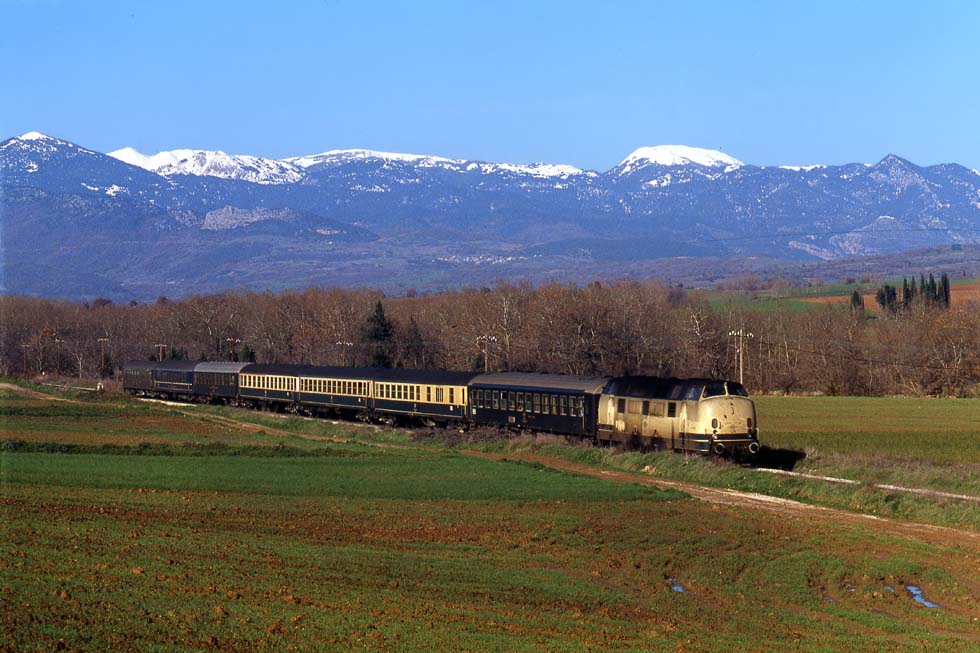
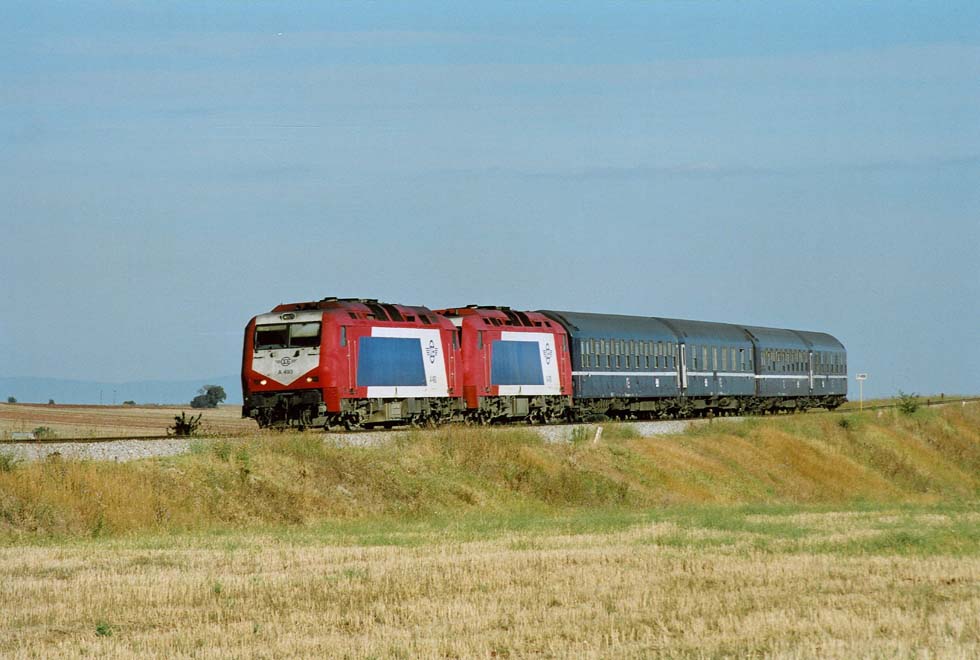
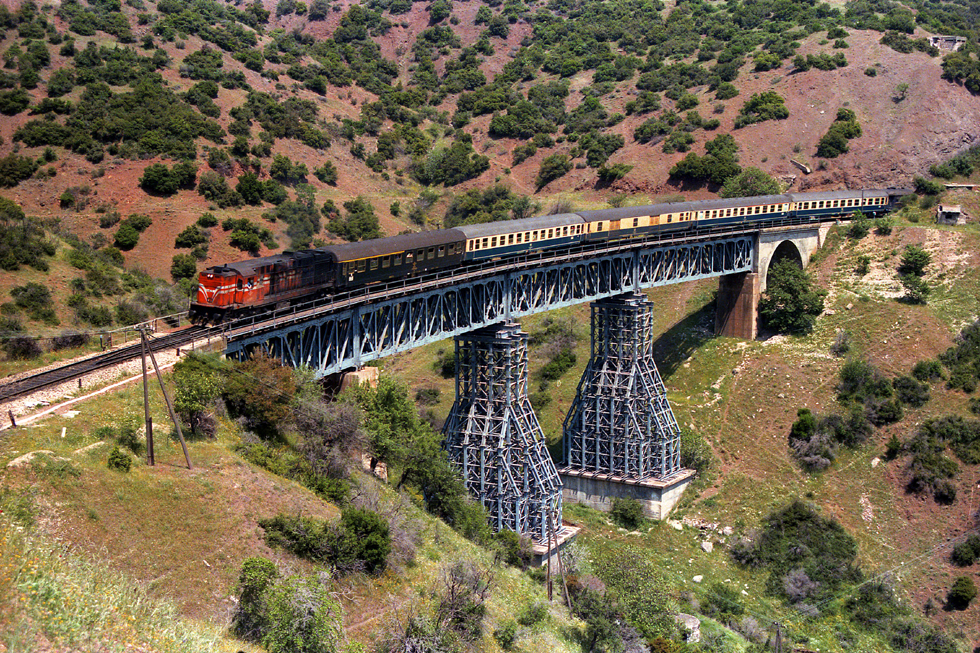 Akropolis in Greece, diesel A-465, in 1987 (K. Kakavas)
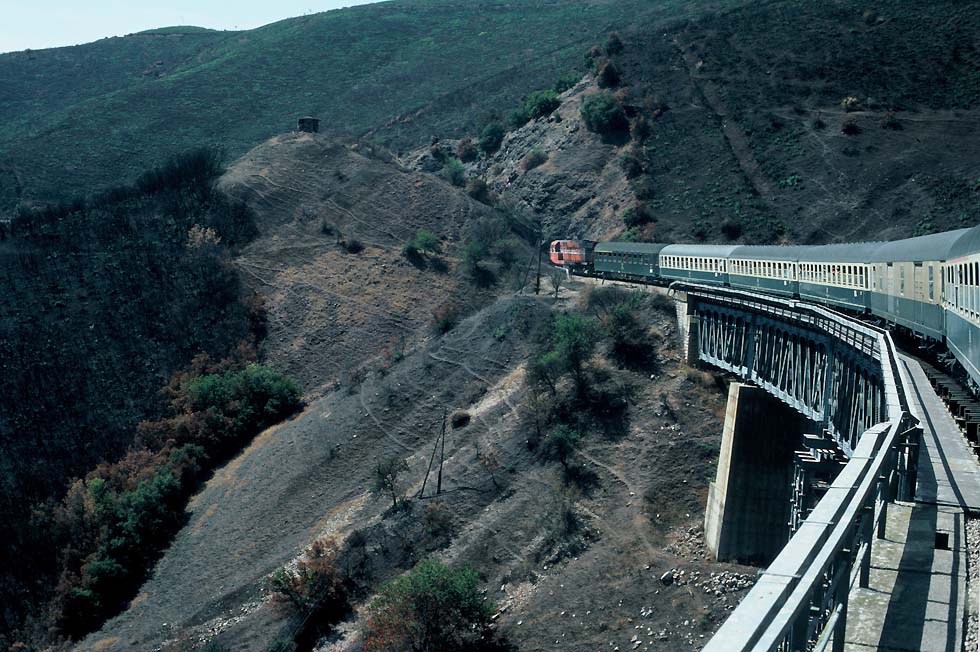
When Yugoslavian railways in 1962 did break apart the Simplon-Orient system, they refused any really modern solution. The Direct-Orient of the Simplon-Orient route became Europe's horror train, crowded, in Yugoslavia with up to 24 cars, dirty and late-running. In Italy it took cars Copenhagen - Venice from the Alpen-Express. The German branch in Austria incomprehensibly was combined with a local "Eilzug" Vienna - Salzburg - Klagenfurt and in Germany in northward direction with the "Mozart" Vienna - Paris. Only with introduction of the Tauern-Orient from Munich in 1966 the situation got a little less confused. Together with the Polonia from Warsaw and the Tauern-Orient, the extremely slow Direct-Orient formed the most important group of trains towards the South-East, then supported by the Hellas-Istanbul group. In Yugoslavia these trains were so overcrowded that passengers slept on the floor and in the luggage van. And regularly they were delayed by several hours. German officials tried to investigate if this situation could have been influenced by corruption, but there was no evidence. A serious attempt, then obviously backed by Tito, to introduce an up-to-date service to the South-East was the “Akropolis” project - a fast streamliner type express Munich - Athens. The idea may have been influenced by the appearance of the German diesel train set “Komet” on two state visits to Athens. In 1958 Greek railways proposed a light train with sleeper seats, no longer steam-hauled. Around 1961 Yugoslavia generally replaced steam traction between Slovenia and Skopje with the dark-green 661 class GM diesels and Greece introduced the nice light-blue Alco diesels between Thessaloniki and Athens. In 1968 the “Akropolis” project should have been realized. German and Greek train sets, including new reclining-chair cars (even more comfortable than the TEE cars) and new couchette cars (10 compartments) were to be ordered, but then the Greek government stopped the project, probably influenced by money-loosing Olympic Airways. Nevertheless the service started with ordinary cars, successfully cutting 8 hours traveling time, but in response to the lack of modern equipment, Yugoslavia withdrew the train’s priority and late-running began, the reason for stopping the train in 1991. In Greece sometimes it had been hauled by a beautiful ex-German V200 diesel. Temporarily a German TEE type 1st class reclining chair or compartment coach and a French car Paris - Salzburg - Belgrade were added. (Information by Rudolf Klebensberger and retired CEH general manager Vasilis Leondopoulos). Akropolis Streamliner project Munich - Athens, never realized, 2 train sets by DB, 2 ones by CEH, 27,5m cars, German type, air-conditioned. The following formation would have been realistic:
Direct - Orient Between Belgrade and Nish, Oct. - Nov. 1965: 661 (diesel CoCo, GM) JZ, Belgrade - Skopje
X=PKP/CSD/MAV/JZ Steam traction: Skopje - Gevgelija (JZ 01, 2-6-2), Gevgelija - Thessaloniki (CEH Lambda-gamma, 2-10-0, Baldwin), Crveni Krst - Dimitrovgrad (JZ 01; or 05, 4-6-2), Plovdiv - Svilengrad (BDZ 01, 2-8-2), Svilengrad - Pithyon (CEH Kappa-beta, 0-10-0), Pithyon - Halkali (TCDD 56.5, 2-10-0 like German 52, sometimes assisted by 46.0, 4-8-0). The Munich branch between Jesenice and Ljubjana before electrification temporarily had been hauled by JZ 06 (2-4-2). Steam shunters: Trieste (FS 835, 0-6-0T), Belgrade (JZ 62, 0-6-0T ex USA/TC), Crveni Krst and Gevgelija (JZ 61, 0-6-0T), Uzunkopru (TCDD 3.4, 2-6-0T, and 33.5, 0-6-0, built since 1877) 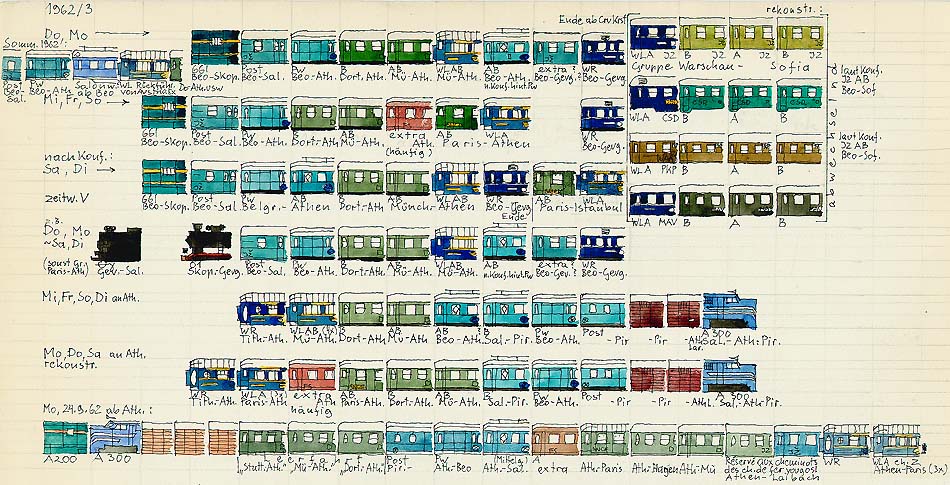 Direct-Orient in 1962/63, an old sketch 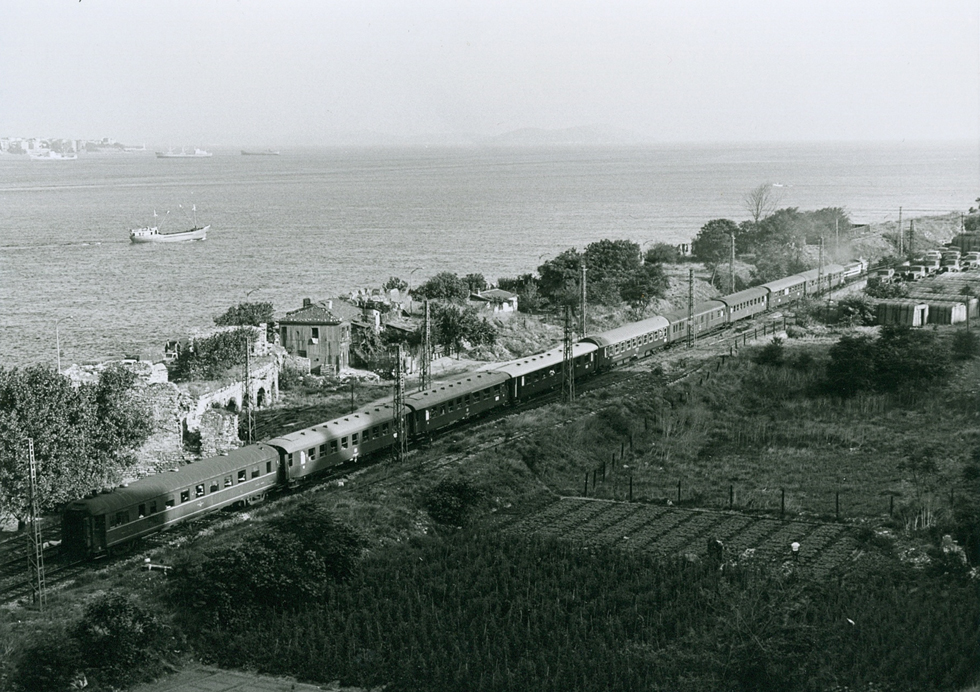 Istanbul-Express to Frankfurt with Balkan-Express to Vienna, TCDD diesel DE20, departure Istanbul, August 1972 (WS)
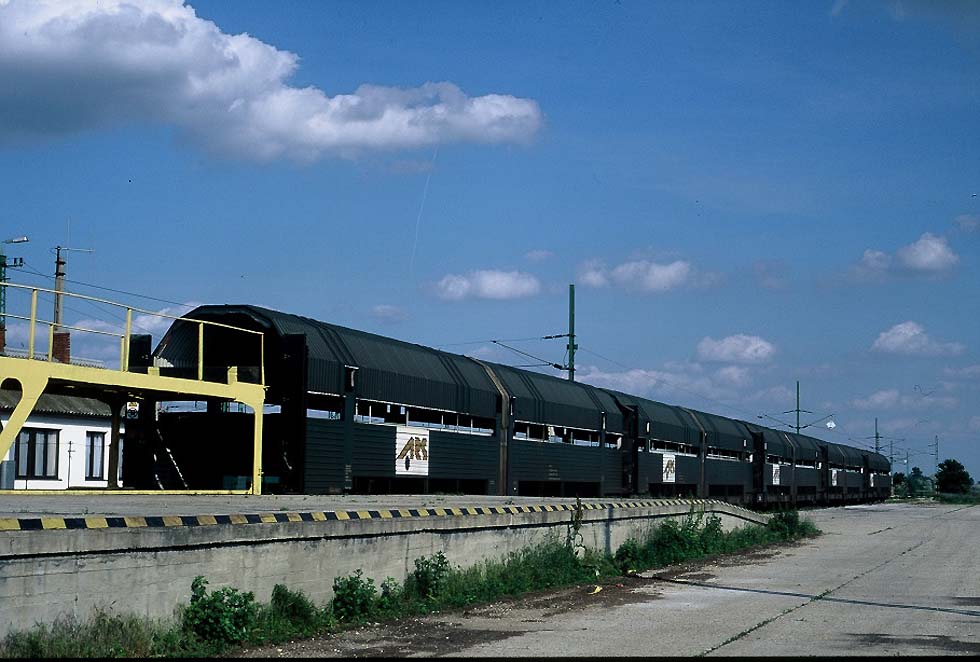
The Paris - Istanbul/Athens services by the Direct-Orient ended in 1977. The last regular trains from Munich to Istanbul and to Athens, the Istanbul-Express and the Attika, from 1991 by the way through liberated Hungary, with sleepers and couchettes only, also motorcar-transporters, were stopped by the Yugoslavian war in 1993. During the last months the Attika left Munich with only 3 German couchette cars, almost empty, and a van. Later (e.g. in the 2005 timetable) there was a Transbalkan (Prague -) Budapest - Bucharest - Thessaloniki with cars to Istanbul for the “Bosphor” (Chisinau -) Bucharest - Stara Zagora - Istanbul. In these countries train at that time still was cheaper than plane. The car-carrying private Optima Express connects Villach with Edirne (an extension to Istanbul became studied) and Villach with Thessaloniki. In 2005 a train Thessaloniki - Istanbul was introduced, named „Filia“ and in Turkish „Dostluk“, what means Friendship, One set consisted of new Turkish sleeping-cars (also couchettes or coaches?) and the other one of 3 or 4 blue Greek T2 sleepers, CIWLT types, bought from France. In the first years particularly the Turkish train was successful, but then less and less passengers appeared and in 2010 Greek railways OSE decided to cancel this last international train to Greece. The only train from Istanbul to Germany was a special for celebrating the 50-years jubilee of the German-Turkish migrant workers agreement. On Oct.30, 2011, it arrived at Munich Hbf with the almost historic 103 245_7. The Bosporus Tunnel, expected for completion in 2012, probably will not see any regular express from Central Europe. The only country on the Balkan which never had an Orient-Express is Albania, where even Chinese cars and the ex-German diesel-hydraulic V200 appeared. In 2014 Greece restarted a train Thessaloniki - Sofia and a Hellas-Express Thessaloniki – Belgrade. Budapest got a train to Sofia via Romania. The line Budapest – Belgrade was approved to become upgraded with Chinese assistance.
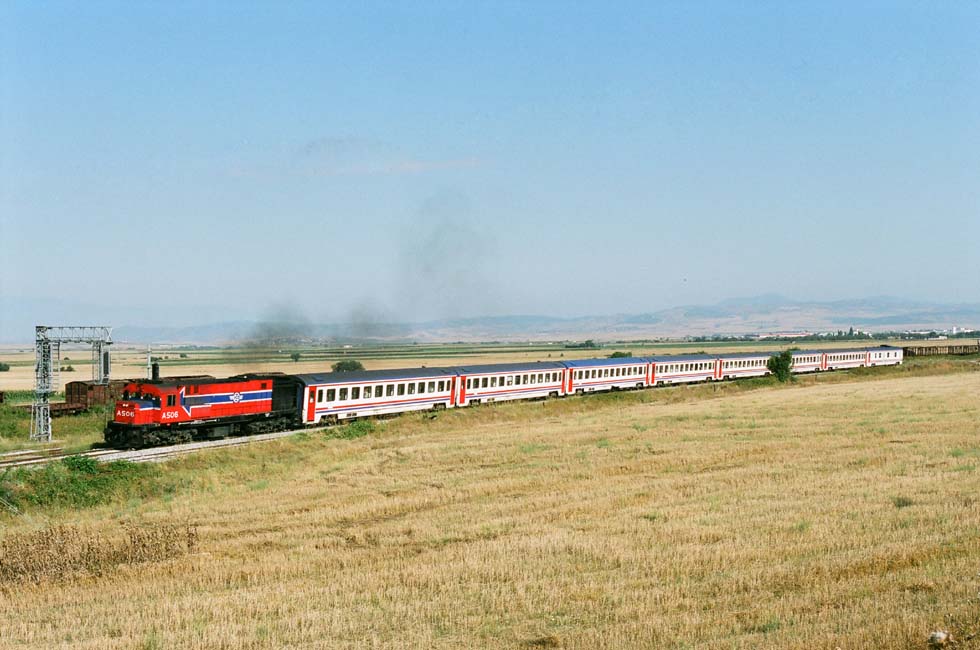 "Filia/ Dostluk Express" Istanbul - Thessaloniki, TCDD cars, at Metallico, Greece 2005 (Nikos Papaletsos, SFS) Optima Express Lebeny (Hungary) - Svilengrad, by Optima Tours, May 25, 1996:
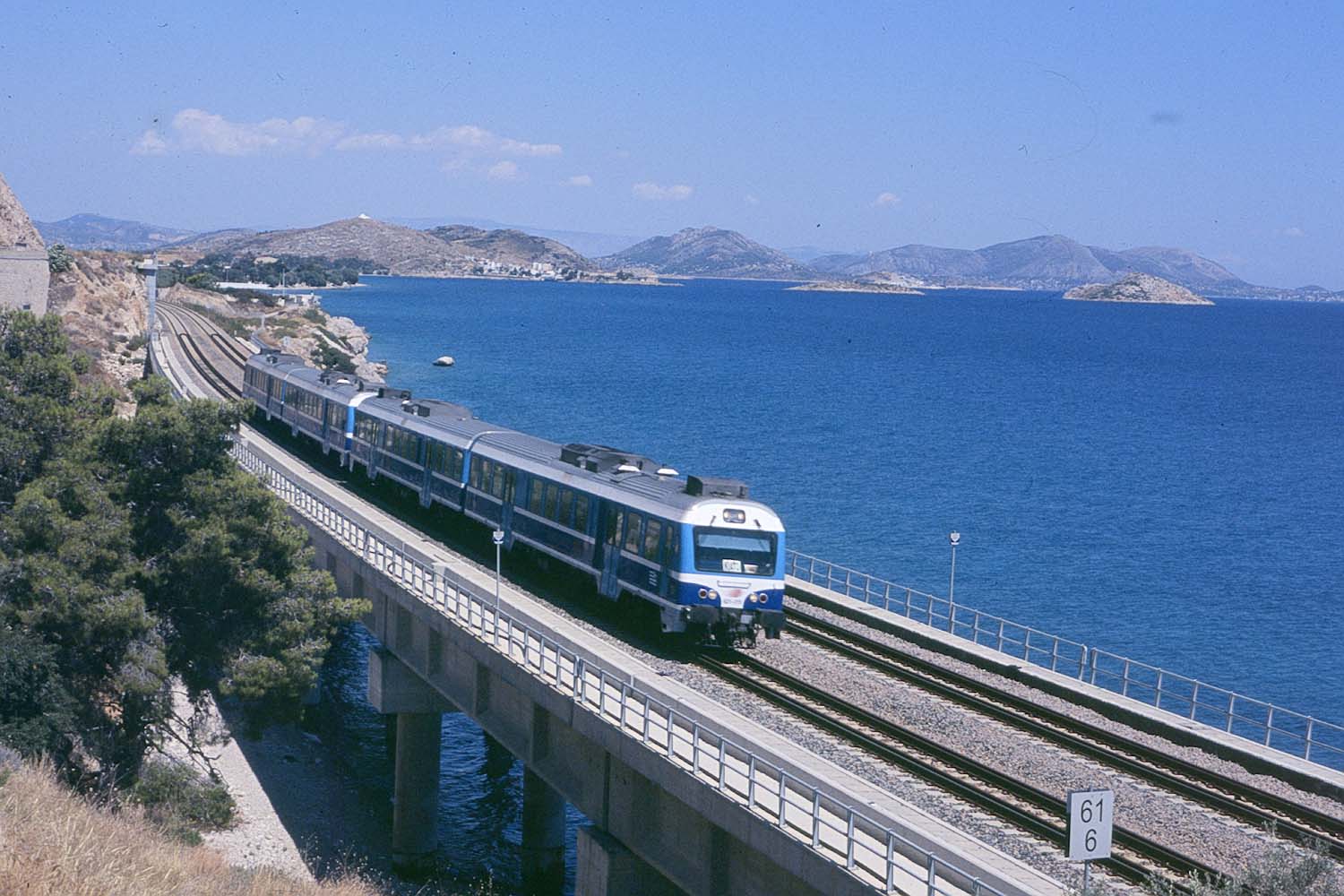
Colors: BDZ Bc cream/dark-red, Hccrrs dark-green. During season more cars, including sleepers, rented from various railways, are added. Greece In 1990 Greece inaugurated Intercity services Thessaloniki - Athens with new cream/red German diesel railcar units and later electrification works started. In 2005 an Intercity train was introduced between Thessaloniki and Athens, which covered the difficult 502 km in 4 ½ hours, though upgrading and electrification was not yet completed. The blue four-car consist, hauled by Adtranz engines, attained 170 km/h or more. When the Hellas-Express (Prague -) Budapest - Athens in 1996 was confined to Thessaloniki (later with a Russian sleeper from Moscow), Athens no longer had any train to the West. The most enjoyable way to go from Western Europe to Greece is by ferry boat from Venice to Patras. Last part of the journey to Athens is by an Intercity diesel unit of the Peloponesos line on meter gauge. Between Corinth and Athens a new standard gauge was opened in October 2005, designed for a future speed of 200 km/h, being extended to Patras. 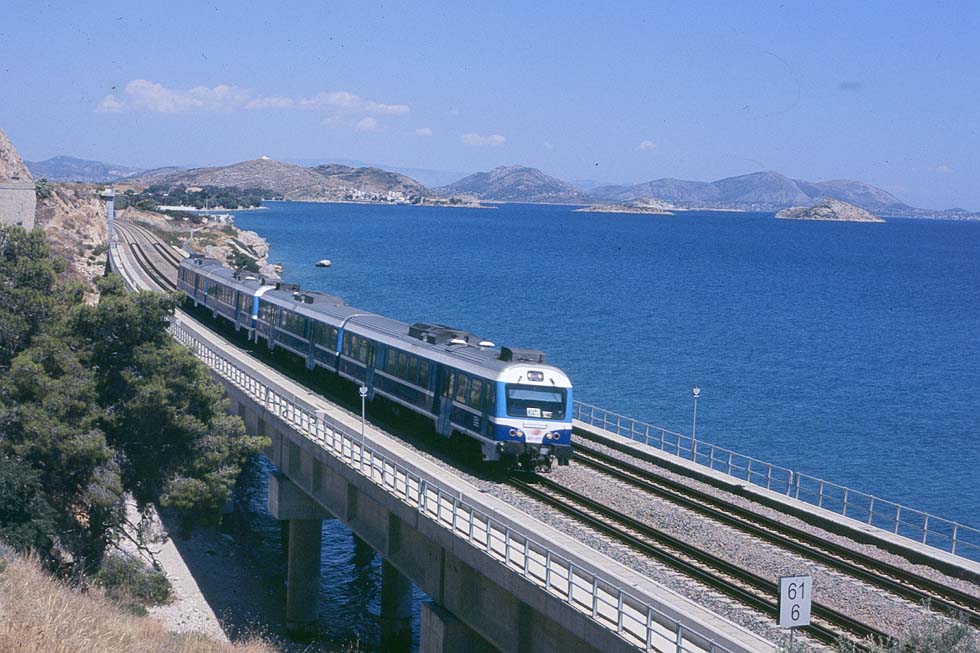 New railcar class 621 Pireas – Corinth - Kiato on standard gauge, near Megara 2008 (WS)
Download this picture with 1500 x 1000 pix, 300 dpi
Orient-Express Departure Salzburg, July 1, 1984:
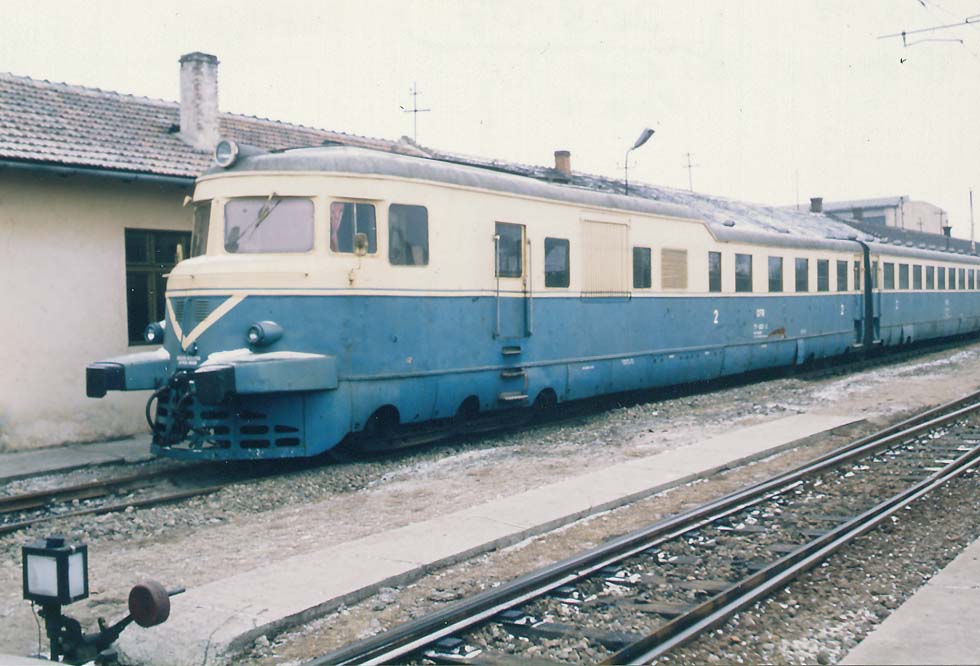
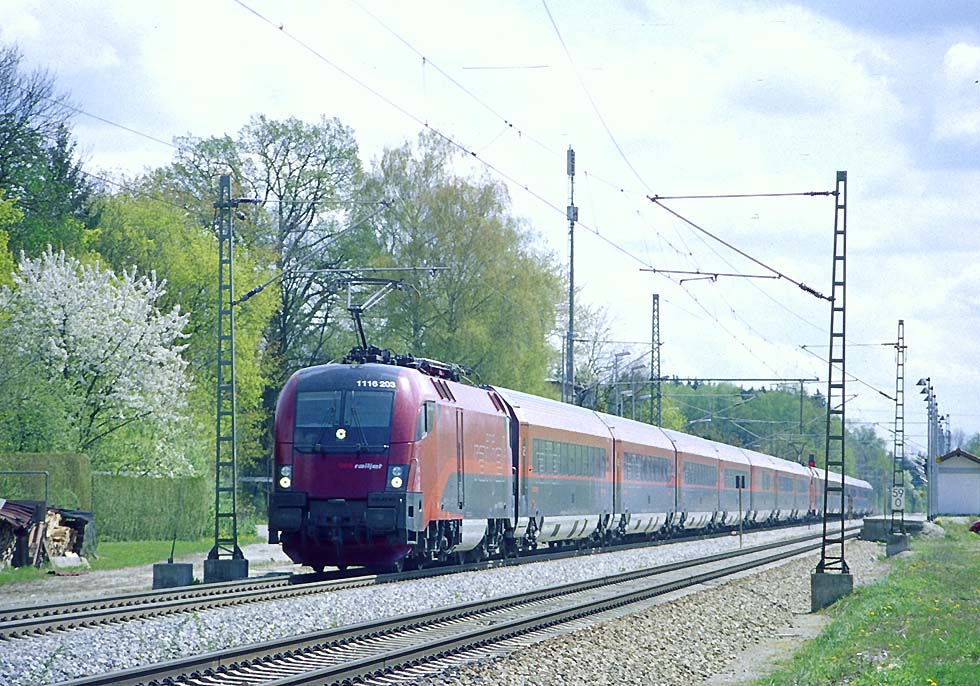
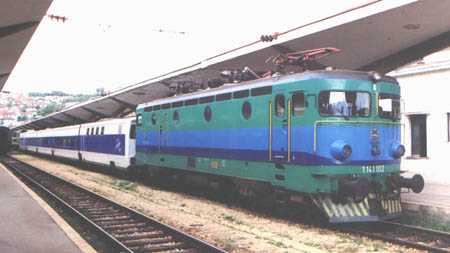
Orient-Express The Balt-Orient-Express Bucharest - Berlin, during its last years a poor immigrants’ train, was stopped in 1995. The traditional Orient-Express Paris - Vienna - Budapest served many local destinations and in Southern Germany it ran in up to four sections. And it maintained for a long time the connection Paris - Bucharest. In the ‘60s sometimes a light-green Romanian special saloon appeared on this train, the rolling office of some minister - and, may be, the secret for the existence of this express to Romania. For all-inclusive tourism in 1965 a Romanian diesel multiple unit 75-0001-0 “Blauer Pfeil” with 160 sleeper seats, 10 two-berth and 4 four-berth compartments should have opened up a service Vienna - Constanta, but it did not start. In 1991 the Orient-Express was accelerated and confined to Paris - Budapest. The Wagon-Lits to Bucharest had been stopped and Romania introduced in 1998 an own sleeper (a red CFR car) running to Paris, but Western administrations prevented people from using it on trips west of Vienna in favor of their own sleeper Paris - Vienna. From the ‘70s these ex-CIWL cars generally were owned by the railway administrations (and had lost their glorious label), otherwise they would have disappeared due to economic reasons. In 2001 the Orient-Express to Bucharest was stopped by Austrian railways east of Vienna and in 2002 the German railway administration “killed” Mozart, the nice Austrian EC day train Vienna - Paris. Though Austria had begun to build a fast approach to Vienna, the high-speed “TGV Est-Europeen” started in 2007 only services Paris - Munich and the ICE3 began running Paris - Frankfurt, in France with up to 320 km/h. A future TGV Paris - Budapest had been only the author's dream twenty years earlier. The humble Paris - Vienna night-express, which ruined world’s most famous train label “Orient-Express”, was confined by French railways to Strasbourg – Vienna, later combined with cars Frankfurt – Karlsruhe – Budapest. In December 2009 this official Orient-Express, by a daily paper nicknamed ‘Der Lumpensammler’ (the rag-picker), found its end – mostly unnoticed. In 2011 takeover of the TGV services Paris – Munich and Paris – Frankfurt by the international consortium Lyra and introduction of the twin-deck TGV was anticipated. Between Munich, Vienna and Budapest the innovative semi-fast Austrian “RailJet” trains with class 1116 ‘Taurus’ engines were introduced in late 2008. ICE-T of DB and OeBB took over services from Germany to Vienna. In late 2010 Bosnia and Herzegovina created a sensation by presenting Talgo day-trains.Services to Zagreb, Budapest, Vienna and Frankfurt are intended, though at that time no train from Germany went beyond Budapest or Zagreb. For December20, 2012 the start of the service Sarajewo – Zabreb was announced and there are great ambitions. The stored Talgo started domestic service in 2016.
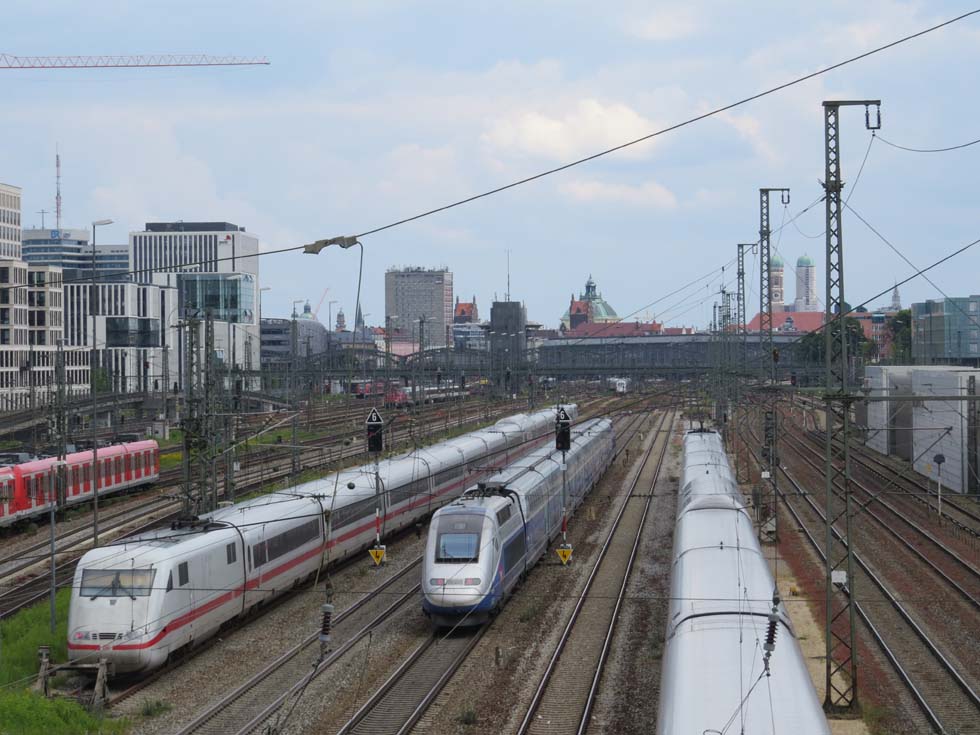 TGV Duplex arriving at Munich in 2014, an ICE1 on the left (WS) 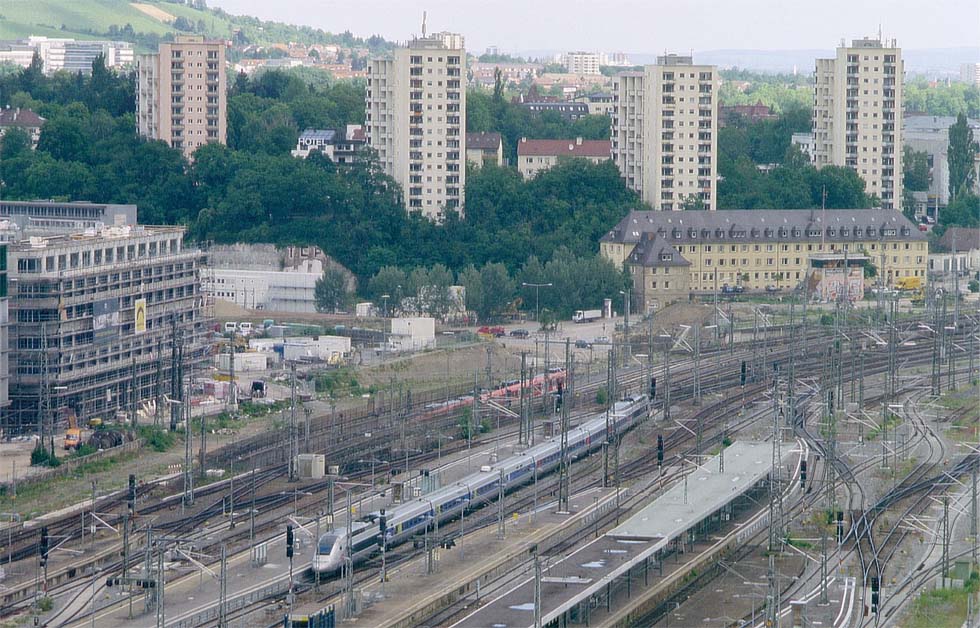 TGV from Paris arriving at Stuttgart Hbf in 2012, still before realization of the project Stuttgart 21 (WS) 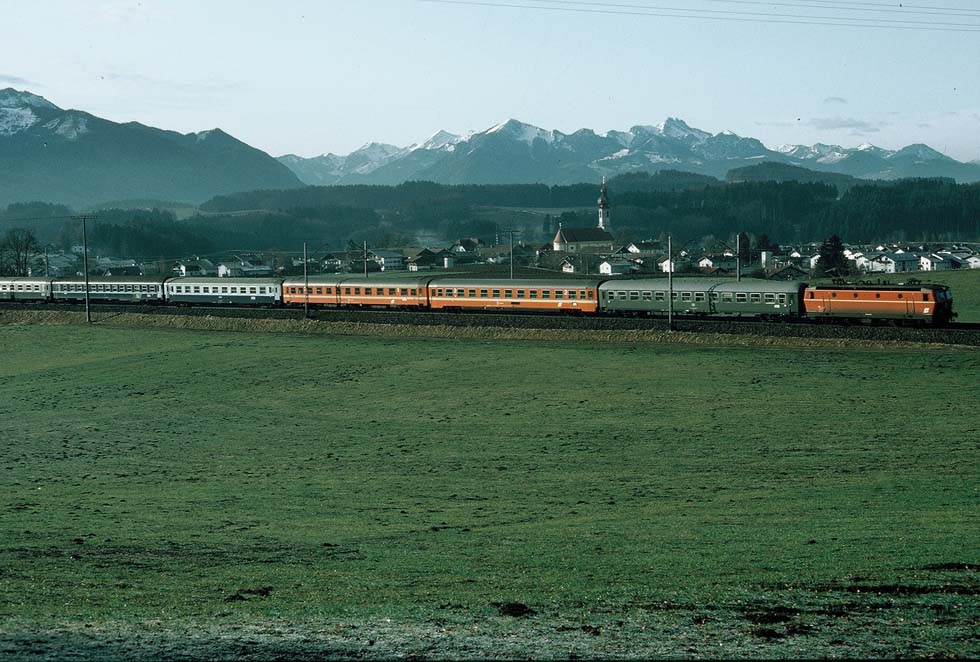 The past: Orient-Express Paris - Bucharest, Austrian class 1044, Vachendorf near Traunstein, Bavaria, Jan. 1983 (WS)
Download this picture with 1500 x 1000 pix, 300 dpi (673 KB)
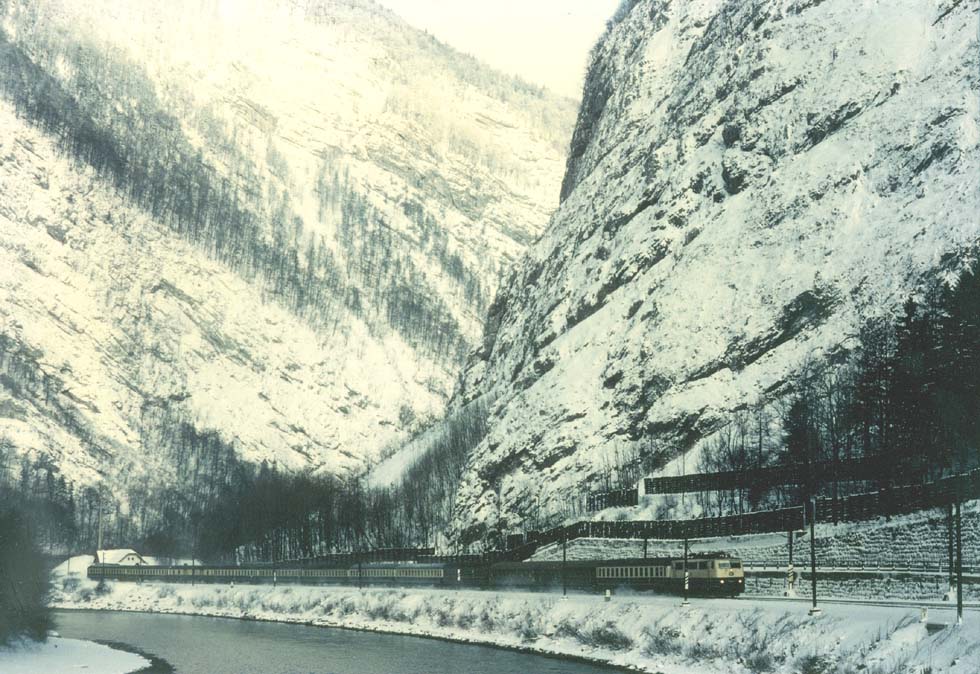 Last ambitions: Akropolis Munich – Athens with DB class 111, Salzach valley in Austria, Jan 1984 (WS)
|