| trains-worldexpresses.com |

| |||||||
| TRAINS | World-Trains | Orient-Ex | Mideast | Indian Mail | Transsiberian | Rome-Ex | Cape to Cairo | Sud-Ex | ...adieu... |
|
The Myth |
Chronology |
Nord-Express |
Siberien-Express |
Nordroute |
Kurier 1 |
Transmanchourien |
Shanghai-Express |
Allied Forces |
Blauer Express | Moskva-Express | Eastern Europe | Baltics and Finland | Red Arrow | Moscow - Beijing | Tourist Specials | China | Far East | Japan | Travels - Reisen | Sibérie adieu | |||||||||
|
G o C h i n a
Download this picture with 1500 x 1000 pix, 300 dpi (650 KB)
 China without Manchuria, old map not yet showing the high-speed lines and other changes The Soviet Union conquered Manchuria in 1945. Control of the former South Manchuria Railway was transferred to a common administration under Chang Kai-ngau, a loyalist of Chiang Kai-shek, but the Soviets removed railway equipment and industry. Mao's troops occupied Manchuria in 1948 and in 1949 the People's Republic of China was proclaimed. On December 17, 1949 Mao arrived by a special train (not yet the German-built special) in Moscow and the result of this meeting with Stalin was the official return of Manchuria to China. In 1955 the last Soviet soldiers left the former Port Arthur by Chinese trains. Already on January 31, 1954 the first through express Beijing - Moscow, consisting of the new Russian sleepers built in East Germany, had left the Chinese capital. Traction in China was by Pacifics of the class SL6, also the streamlined SL8 ex-Pasi Ha and then the Pacific RM. On the new, shorter Transmongolian line the Chinese train Beijing - Moscow was inaugurated in 1959. Passenger services on the new third line to China via Almaty (Alma Ata) in Kazakhstan and Urumqi in China were opened not before 1992, see chapter Transsiberian/ Moscow-Beijing. Standard steam locomotive classes of the People's Republic of China From Chinese production:
Steam locomotives from predecessors:
Information according to Clark and Pearce. Several AM classes of 4-4-0 types and TH classes of 4-6-0 engines disappeared before 1975. The SL17 disappeared before 1955, the SL18, 19, 20 before 1975 (according to Whitehouse). According to Florian Schmidt there were Pacifics numbered up to SL21. The fate of the Pacifics from Su-Tao, Kowloon-Canton and Kiang-Nan railways is unknown. 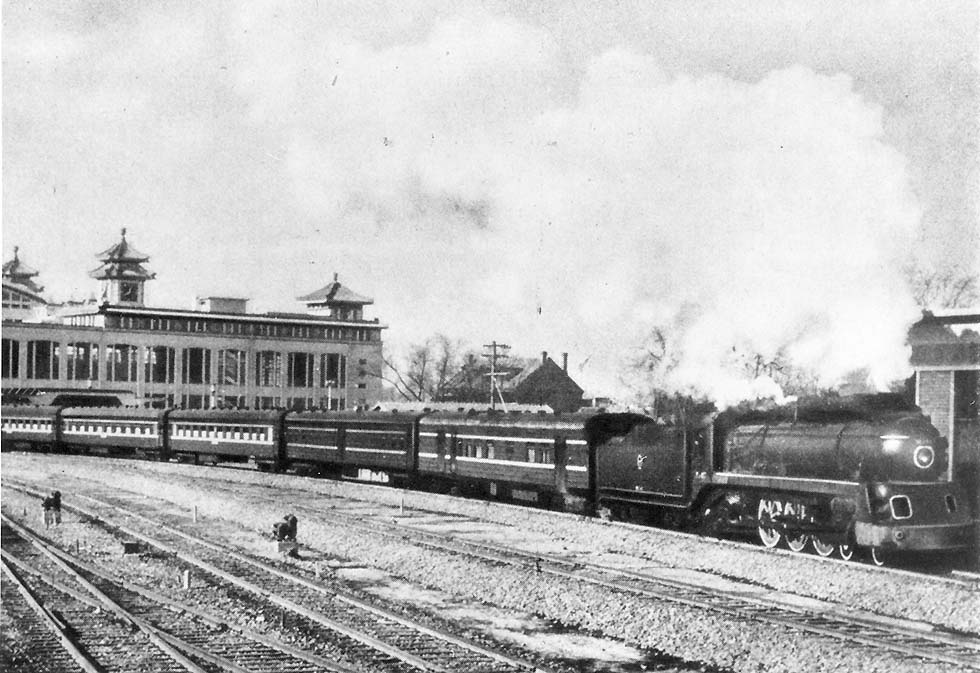 Express Beijing - Harbin - Moscow, the only known picture with a streamlined Pacific SL 8, the ex-South Manchurian class Pasi Ha, hauling Soviet sleepers, departure at the new Beijing station, probably at the end of the '50s (official Chinese photograph)
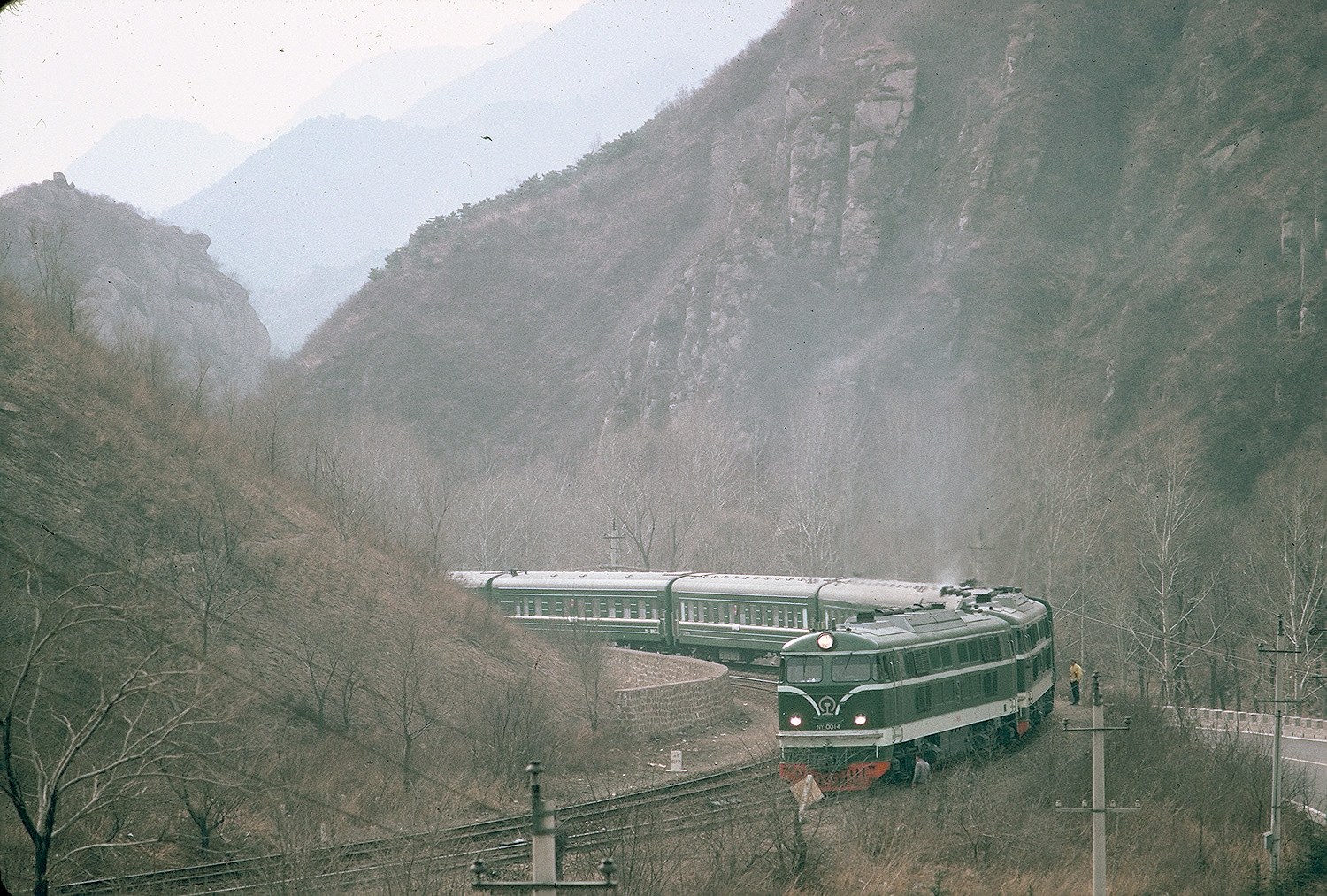
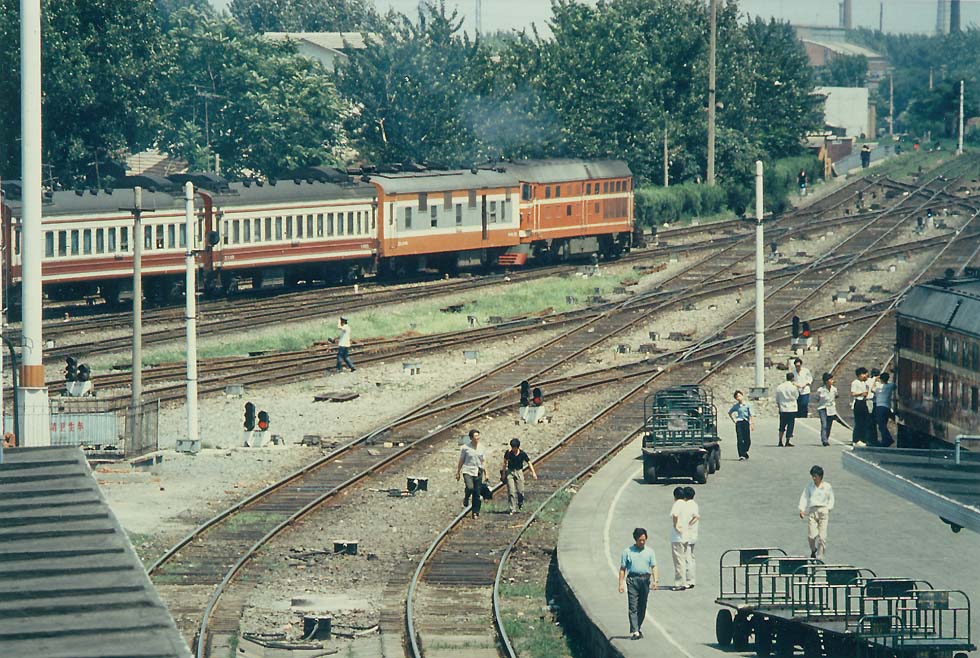 Fex13 (?) Beijing - Shanghai with diesel class DF4, Beijing 1991 (Wolfram Veith)
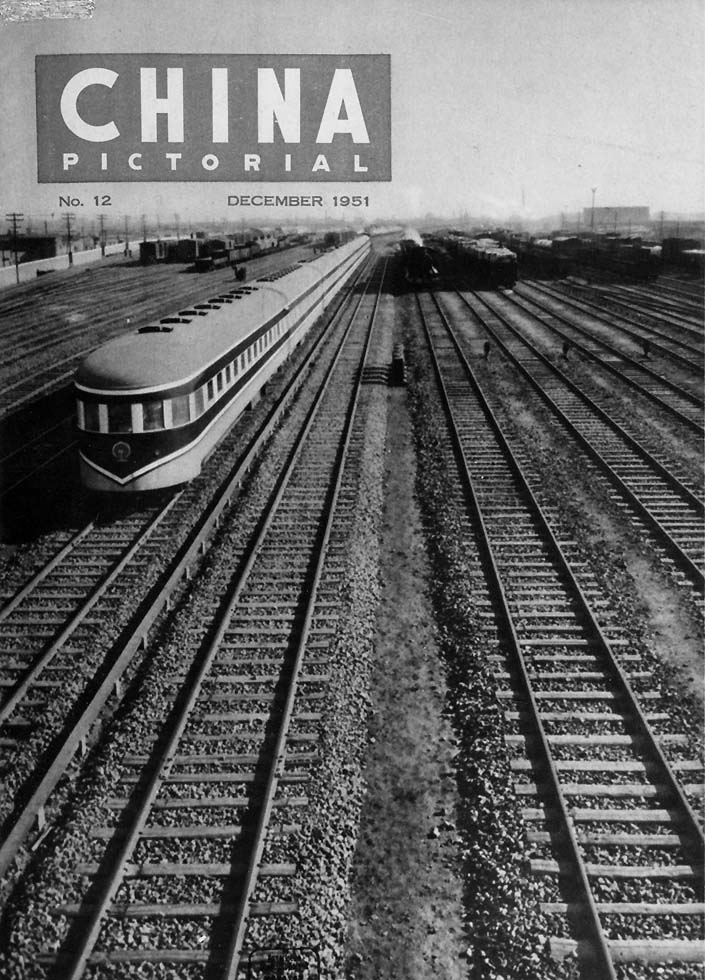
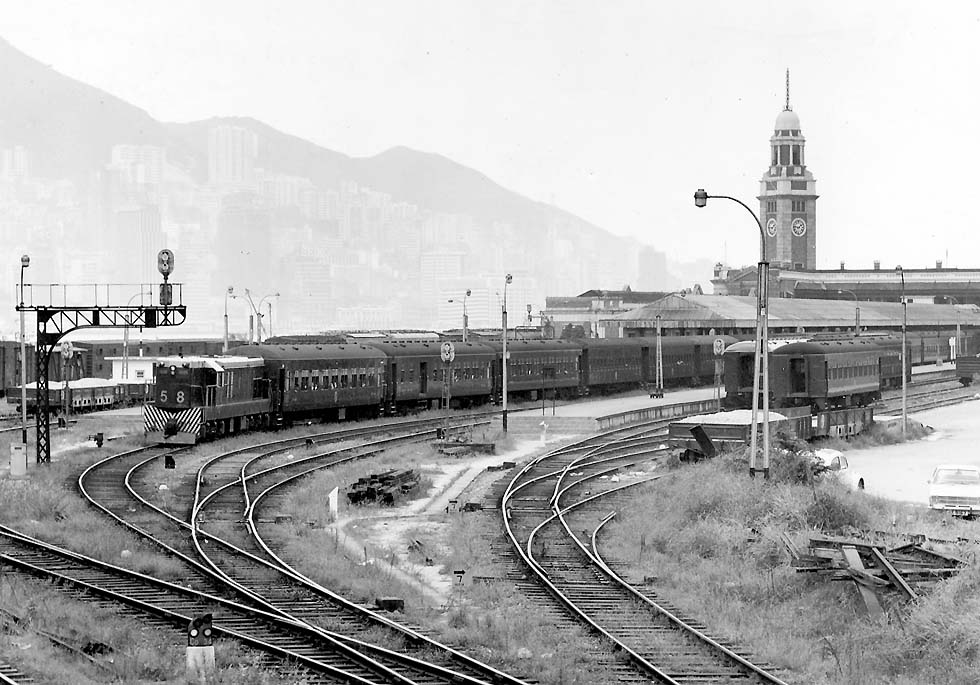
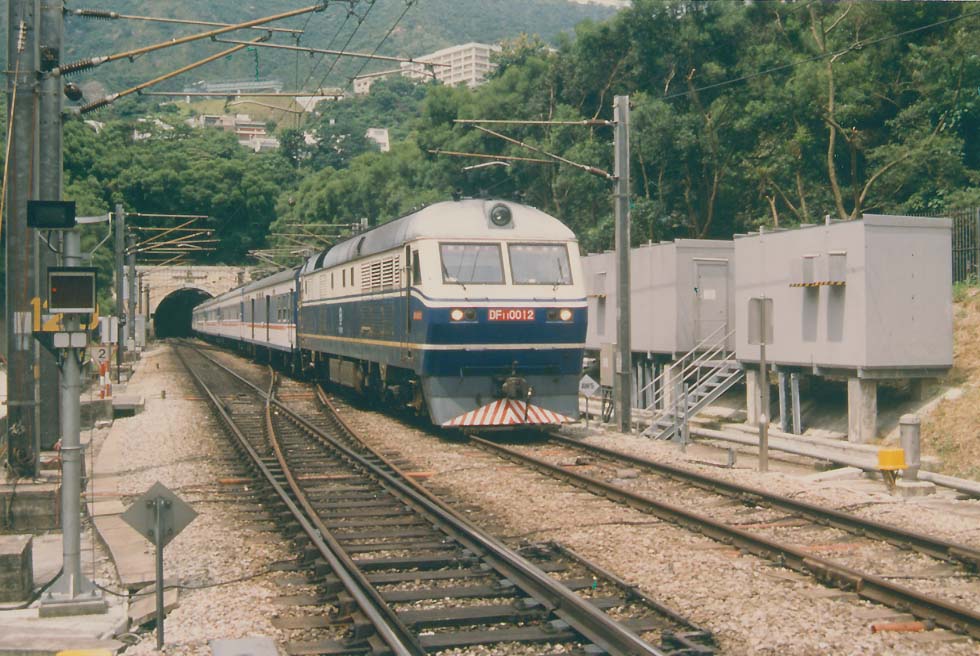
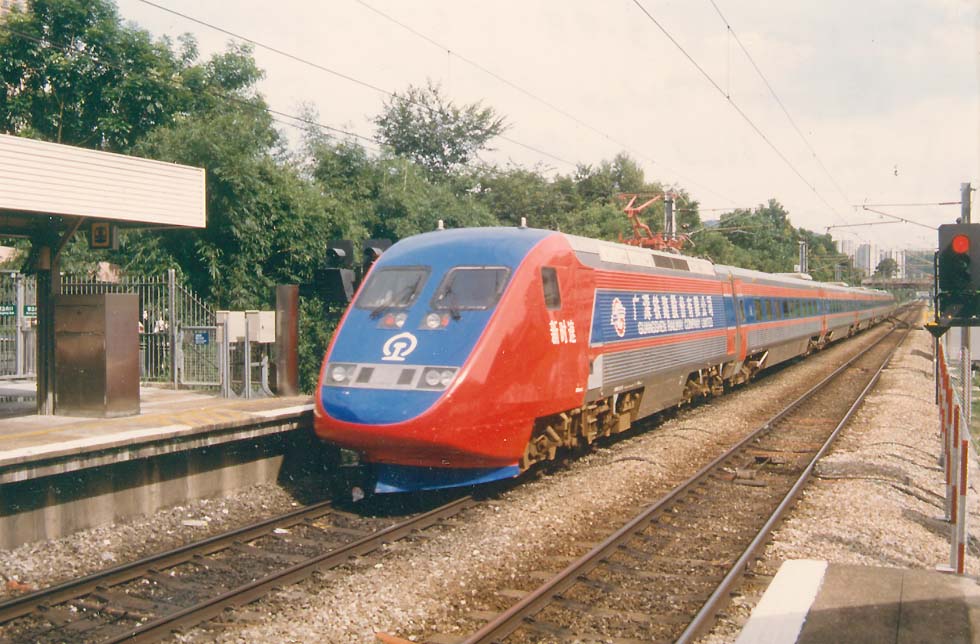
Shanghai Express Under Japanese occupation, the line Beijing - Shanghai obviously was re-opened in 1941. After WWII in communist China, on the Southern section Nanjing - Shanghai appeared the beautiful KF1 Niagaras, designed by Chiang's Bureau of Standards under the British Colonel Kenneth Cantlie, built in 1936 by Vulcan Foundry in England. Around 1957 some luxurious sleeping compartments were advertised. New car production in China, as well as in the Soviet Union, was based on Eastern German designs. In 1966, Mao's "glorious rebels" interrupted the Shanghai Express and other services. In 1968 the Chinese completed the mighty Yangzi bridge, abandoned by the Soviets. During the 80's appeared air-conditioned standard cars on the Shanghai Express, red/cream colored instead of the usual green, and red DF4 diesels. And the 25kV electrification of the Chinese network had started. Around the turn of the century Harbin - Shenyang, Beijing - Lanzhou, Beijing - Hong Kong and many other lines already had been electrified. In 2002 the Shanghai Express was re-equipped with nice red cars and nice stewardesses. In 2005 among the 7 night trains Beijing - Shanghai, 5 ones exclusively had "soft" sleepers, air conditioned, and generally the expresses sported a new white/blue livery. At Shanghai the expresses for Beijing still started with DF11 diesels. Hong Kong After WWII Hong Kong continued to be a British colony. Traffic to Guangzhou (Canton) was resumed, but with Mao’s victory the through trains disappeared except some special cars for V.I.P.’s, according to an information by the Kowloon-Canton Railway. Gone had the through cars Beijing – Hong Kong, having been ferried across the Yangtse on pontons, hauled by tugs, as Ulrich Fuhrmeister had reported it in 1938 (see BahnEpoche 02/2012, www.bahnepoche.de). After Mao’s victory, ordinary passengers had to walk over the border bridge at Lo Wu. Around 1955 the Kowloon - Canton Railway got new dark-green cars from Cravens, England. In 1979 (April 4) Chinese trains started between Guangzhou and Kowloon (Jiu Long), where four years before the new station Hung Hom had replaced the old terminus at the Star Ferry terminus. The trains consisted of “soft” day coaches and they were hauled by DF3 diesels, then ND2 from Romania and DF4. After in 1997 Hong Kong became a part of China and expresses Beijing - Kowloon and Shanghai - Kowloon were introduced, white/blue trains arrived at Hung Hom station with DF11 diesel engines. The SS8, based on the SS5, was the first electric engine entering Kowloon Hung Hom, but for a long time the DF11 diesels dominated.
 Passenger train Beijing - Lhasa with NJ2 class engines in 2006 (official photo)
Lhasa A railway to Tibet was Mao's dream, considered primarily a strategic task. Projects of 1948 envisaged lines from Lanzhou (connected with Beijing since 1952 via Baoji and since 1958 also via Baotou) and from Chengdu in the south. That southern project should get at Paan a branch to India, exactly to the province Assam, the terminus of the Indian meter-gauge, then changed to broad-gauge. As India prefered commercial ties with the Soviet Union, that project was politically unrealistic. Finally Lanzhou - Golmud was ready in 1981. From there building the line to Tibet started, From July 2006 the express T27 connected Beijing with Lhasa, the traditional holy city of Tibet, once the seat of the Dalai Lama. The inaugural train was hauled by the three modern turquoise/pastel colored CoCo de General Electric diesel locomotives NJ2 of a new type, like the air conditioned cars from Bombardier built for that highest railway of the world over the Tangula Pass with 5072 m altitude. The regular express with the green cars covers the 4000 km Beijing - Lhasa within 48 hours, much faster than the European long-distance trains of bygone days. Photographs are showing those trains consisting of more than 16 green cars, hauled by three NJ2 engines. The new section Golmud - Lhasa with a length of 1142 km had cost 4.1 billion dollar. The ticket price for 1st class sleeping-car (one-way) is 1262 yuan (c.145 euro), for a lower class seat c.40 euro. For 2008 a tourist special became announced by the press, with 4 suites per car probably the most comfortable train of the world. Newsweek (July 17, 2006) reported that the British entrepreneur Ivor Warburton "is envisioning a deal with the Chinese government to introduce $1000-a-day luxury-class service on the newly opened line between Qinghai's capital, Golmud, and the legendary Tibetan city of Lhasa". It was a dream. Revolts in Tibet in 2008 however did not stop the regular train services from Beijing, Shanghai, Guangzhou and other cities to Lhasa. A Lhasa - Xigaze extension being under construction was reported in 2009. T28 Lhasa - Beijing Xi, August 7, 2006 (according to Railway Journal, Japan, no.482): 3 NJ2 diesel-electric Lhasa - Lanzhou 1 SS7E electric engine Lanzhou - Beijing 1 KD25T van Lhasa - Beijing 4 YW25T "hard" 4-berth Lhasa - Beijing 4 YZ25T open saloon chair cars Lhasa - Beijing 1 CA25T restaurant Lhasa - Beijing 2 RW25T "soft" 4-berth Lhasa - Beijing 4 YW25T "hard" 4-berth Lhasa - Beijing Train K917 Lanzhou - Lhasa was reported with traction by two older diesels DF4D Lanzhou - Geermu (Golmud) and three DF8B Geermu - Lhasa. Hainan That strategic island in the south was linked with the harbour Haikou on the mainland in 2003 by a modern train ferry service. During decades almost nothing was known about Hainan, but then Cook’s Overland Timetable confirmed a direct train service between Beijing and Sanya on Hainan island. For Hainan see http://www.ships-worldwide.com  High-speed CRH1E, a 16-car set from Bombardier, passing Suzhou, north of Shanghai, March 2011 (WS) High-speed Not only in Japanese-occupied Manchuria, but also in the Shanghai region pre-war activities targeted faster trains. A semi-streamlined steam railcar set had been shown by Ulrich Fuhrmeister’s report of 1938, connecting Shanghai with Nanjing (see BahnEpoche 02/2012). The sensation came in 2002, when the German maglev airport link at Shanghai between Long Yang Road and Pudong International Airport was completed. The 5-car sets started running regularly, successfully and quietly at speeds up to 430 km/h - and some German press had combated it in vain. For the German maglev technology, faster than everything on rails, a high cost of 40 billion dollar for 2,000 km had been expected. Nevertheless an extension of the existing Shanghai airport line to Hangzhou (distance c.200 km) has been envisioned. Realistic is the proposal of connecting also Shanghai Hongqiao. For Beijing - Shanghai over 1,300km, maglev trains could compete with airlines even more successfully than the new standard high-speed line. With the end of prime minister Zhu Rongji's term in 2003, the next project Shanghai - Nanjing however became uncertain. In 2004 the Chinese government decided for conventional Japanese Shinkansen technology at a cost of 12 billion dollar for 2,000 km high-speed lines between Beijing and Shenyang, Qingdao and Jinan, obviously cheaper than the German competitor ICE3 with equivalent technology. Chinese nationalists however were opposed and in 2005 China ordered 60 ICE3 type trains in the upgraded "Velaro" version from Siemens, 30 of them to be built in China. These CRH3 trains were presented in 2008 for high-speed services Beijing – Tianjin. From Japan a derivative of the JR East E2 type was ordered. Alstom proposed an 8-car unit with a maximum speed of 350 km/h for Beijing - Shanghai services with distributed power, based on the AGV development. And China has developed its own test units, e.g. the “China Star”, which had been intended for Beijing – Shanghai. Wikipedia reported construction of early test sets, resembling the German ICE1 with separate engine units, informing “two test trains built, a third not presented.” In the meantime Chinese developments based on the Japanese E2, the Siemens ICE3/Velaro and the Bombardier Zefiro with regular top speeds of 350 to 380km/h were introduced. Some sources stated that even 400km/h or more became envisioned. When a CRH380A, a Chinese-built derivative of the Siemens CRH380C, achieved during tests 486.1km/h, it was stated that it is a train for regular operation, while the French TGV achieved its 574.8km/h record in a special configuration. In 2009 the Siemens-built CRH3C opened regular services on the new line from Beijing South station, a masterpiece of architects Terry Farrell & Partners, to Tianjin, some trains running to Tanggu. The 118 kilometers were covered within 30 minutes at a top speed up to 350km/h on a track with a minimum curve radius of 7,000 meters and a distance between track centers of 5m. Conventional trains with DF11 diesels on the old line had a traveling time of more than 1 ½ hours. In December 2009 the new line Wuhan – Guangzhou was opened, the CRH2C and CRH3C train sets covering the 968km in less than 3 hours at a top speed up to 380km/h, while traveling time on the old line was 10 ½ hours. Building a high-speed line Guangzhou - Hong Kong has started, to be completed in late 2012, with a spectacular deep-level terminus at Kowloon. Advertisements showed Siemens-type trains (and like in Germany, public protesters were stirred up). The crash of two bullet trains on 23 July 2011 at Wenzhou was eagerly reported by some media, stating that it caused a speed reduction to “only” 300km/h. According to Thomas Estler (in his book “Schnelle Zuege der Welt”) and Railway Gazette, this speed reduction had been concluded already in April 2011 on economic reasons and was imposed on July01, 2011, before the accident happened. On 30 July 2011 the new high-speed line from Beijing South to Shanghai Hongqiao was opened, the 1,318km completed within only 3 ½ years, doubling capacity. The CRH380A covered the distance in less than 5 hours. Operation with CRH380A, AL and CRH380B was announced, for a speed of only 300km/h also CRH3. Initial fares varied from 410 to 1,750 yuan. The Financial Times (Aug.5, 2011) informed: “In the wake of July’s rail disaster, passengers have reported that first-class carriages on the new bullet train line between Beijing and Shanghai have been nearly empty”, but “… government investment in rail is likely to remain strong as well.” High-speed was not abandoned in favor of the international oil industry. Future high-speed trains Beijing – Hong Kong were expected to cover the c.2,500km within 8 hours and for Shanghai – Hong Kong a time of 6 hours was announced. Even with a slightly longer traveling time, such a journey would be unthinkable in Old Europe, not to speak of the USA. According to Railway Gazette Intl (Feb.2010), all the high-speed projects in the current master plan will top 11,345km by 2020. Among the lines under construction, also connections in more remote regions of China appeared, e.g. Chengdu – Chongqing or Lanzhou – Urumqi. In 2009 a Chinese-Russian venture for building high-speed lines in Russia was announced. Considerations of a “Pan Asian” railway from China to Singapore, via Vientiane in Cambodia and Bangkok, and fantastic ideas of connecting even India were published. Not yet in public consideration and even more fantastic would be a high-speed line to North and South Korea. The semi-high speed sector had been pioneered with the "Lanjian" services Guangzhou - Hong Kong, using Swedish-built X-2000 type electric units. Then new derivatives for 250km/h were built, based on other foreign developments, e.g. the CRH5A resembling the Italian ETR600, but without its tilting technology. Also sleeper versions for 250km/h entered service, equipped mainly with 4-berth compartments – while nowhere else in the world high-speed sleeping-car trains have been tried. A typical route for the CRH2E sleeper trains became Beijing – Shanghai, and Beijing – Hong Kong is expected. Ambitions for still faster trains were not stopped. When the line to Qingdao was unveiled in December 2011, researches targeting test units for 500km/h with a power of 22,800kW, the structure including carbon-fibre and nano components, were reported (by Railway Gazette Intl). China‘s High-Speed Trains as far as known in 2012, test vehicles and early semi-high-speed trains not mentioned:
|