| trains-worldexpresses.com |

| |||||||
| TRAINS | World-Trains | Orient-Ex | Mideast | Indian Mail | Transsiberian | Rome-Ex | Cape to Cairo | Sud-Ex | ...adieu... |
|
The Myth |
Chronology |
Nord-Express |
Siberien-Express |
Nordroute |
Kurier 1 |
Transmanchourien |
Shanghai-Express |
Allied Forces |
Blauer Express | Moskva-Express | Eastern Europe | Baltics and Finland | Red Arrow | Moscow - Beijing | Tourist Specials | China | Far East | Japan | Travels - Reisen | Sibérie adieu | |||||||||
|
F a r E a s t
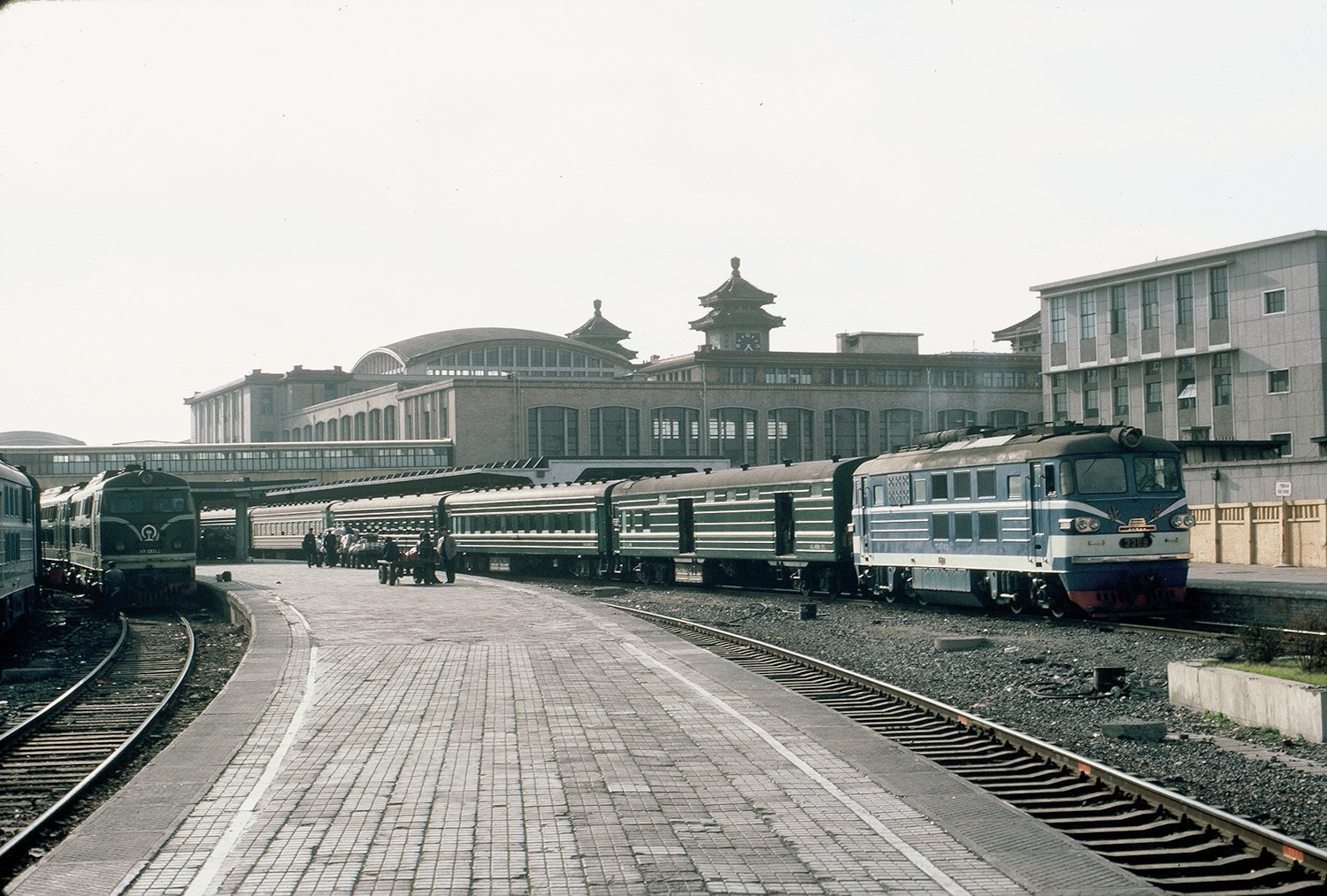
Download this picture with 1500 x 1000 pix, 300 dpi (479 KB)
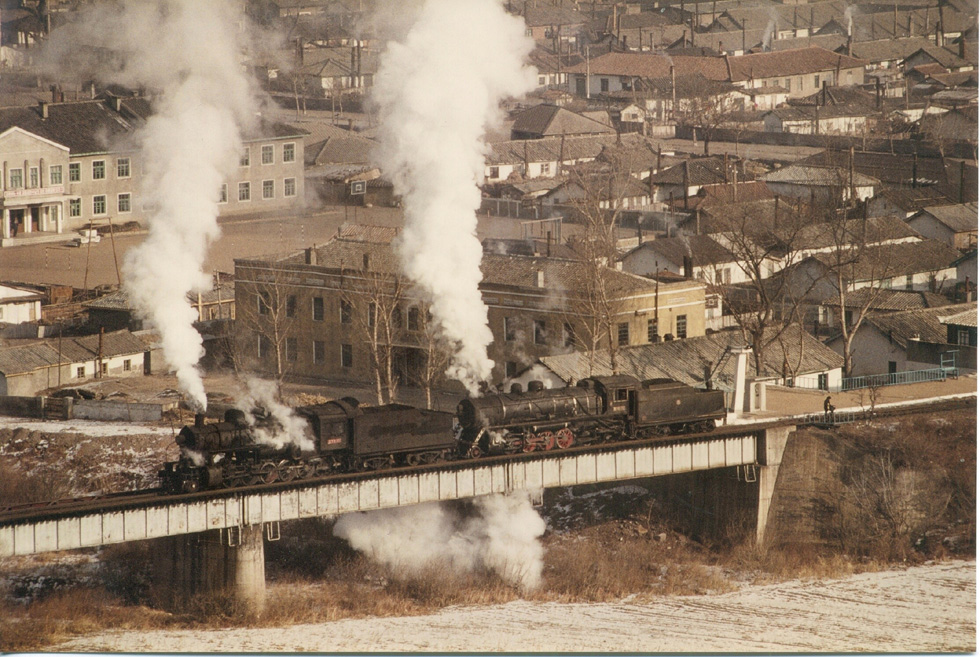 North Korean engines shunting on the Korean side of the bridge to China above the frozen river Tumen in the utmost north, 31 Dec. 1988 (Guenter Haslbeck)
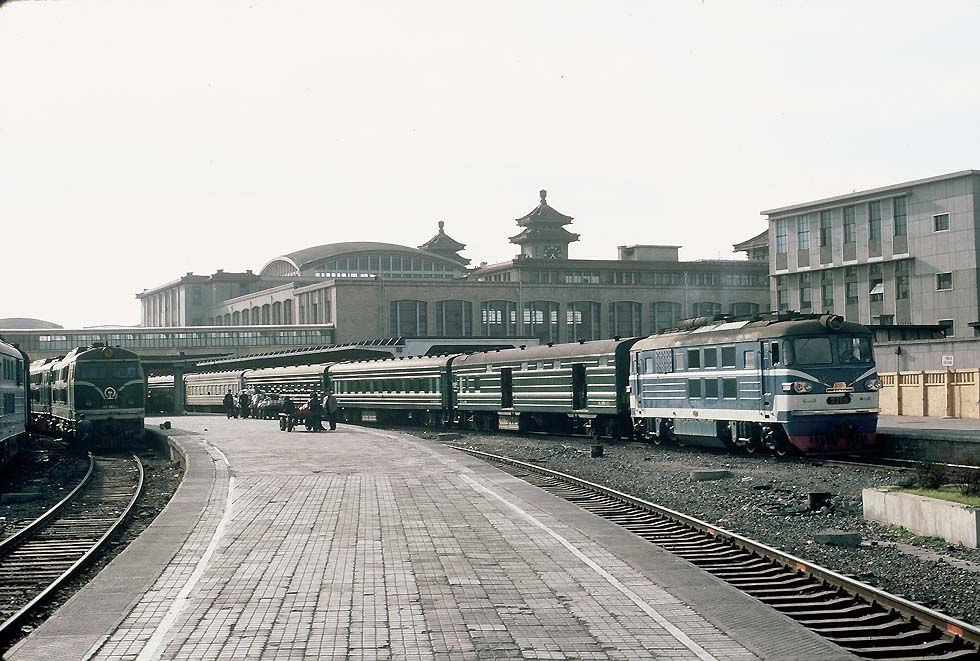
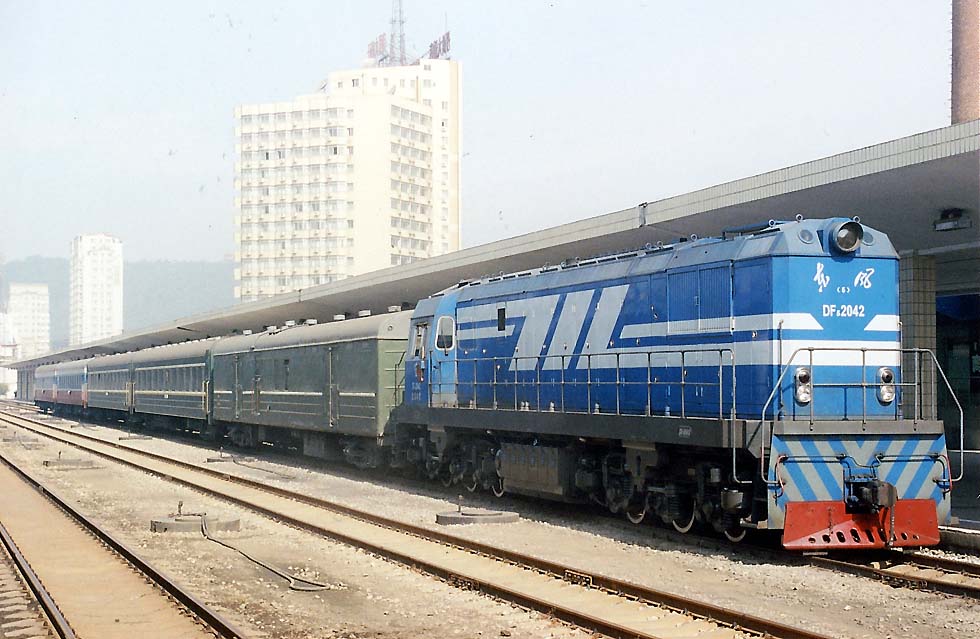
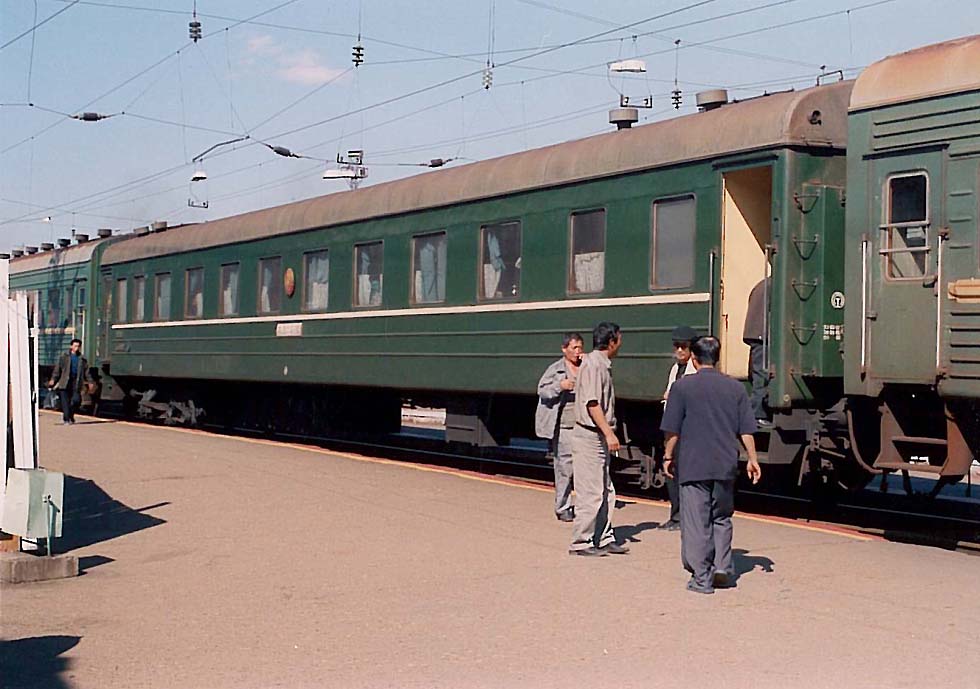
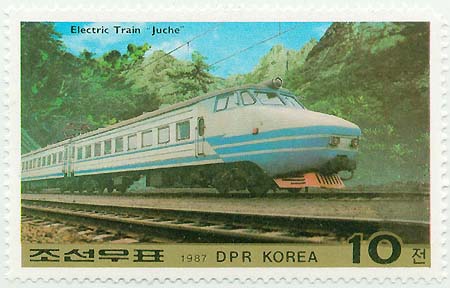
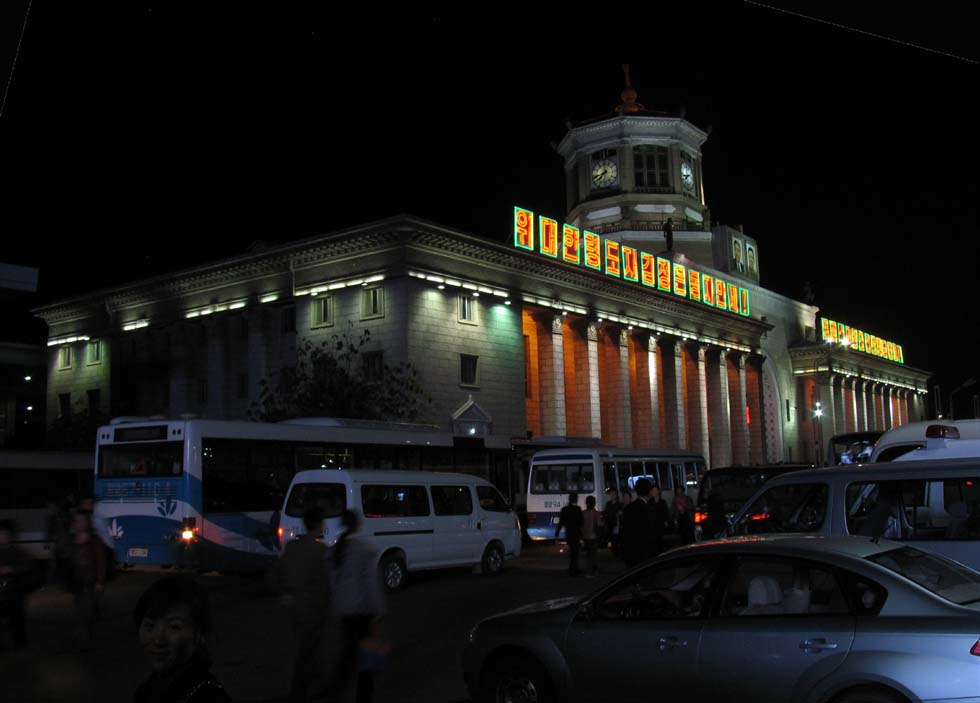
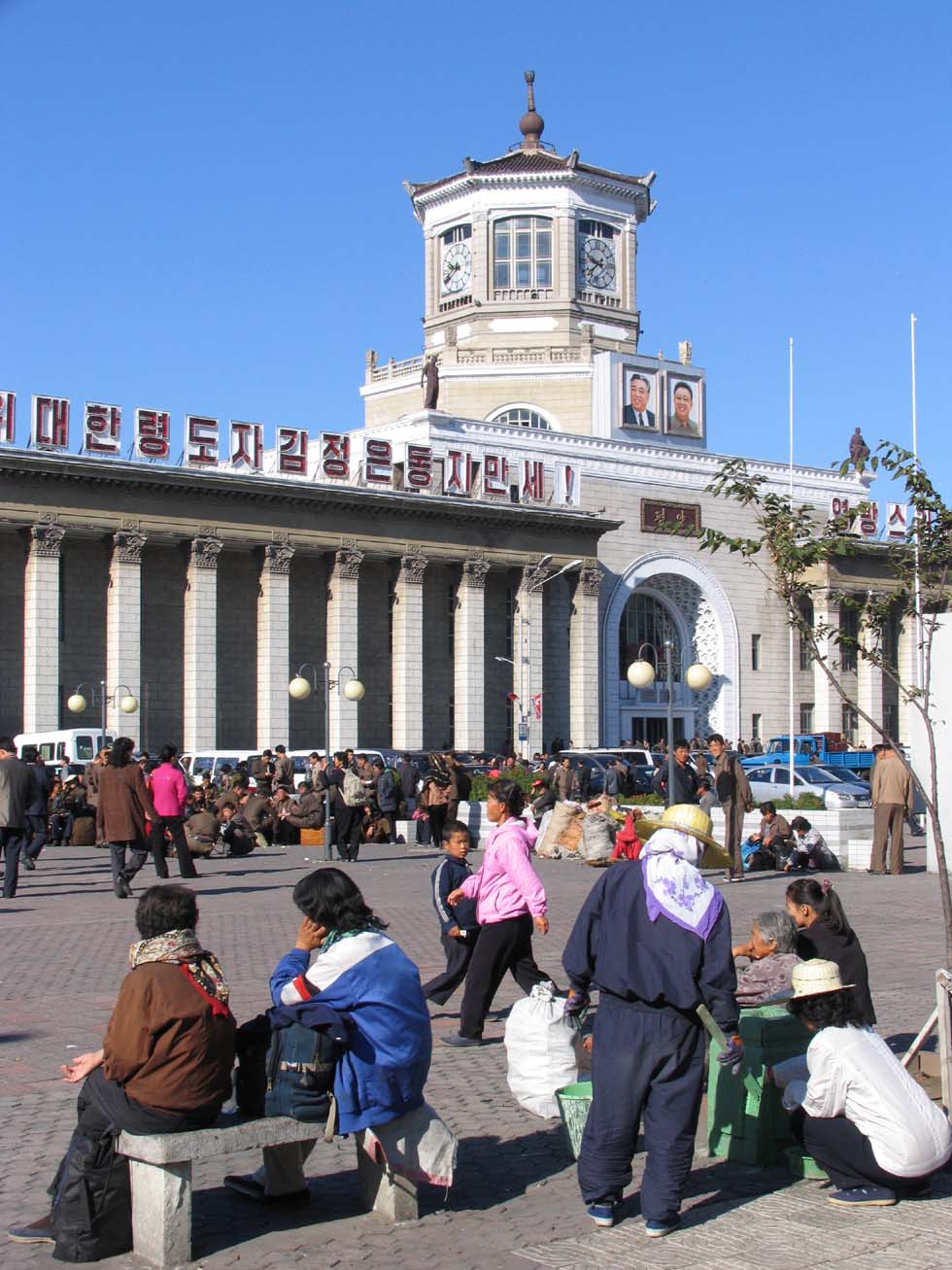
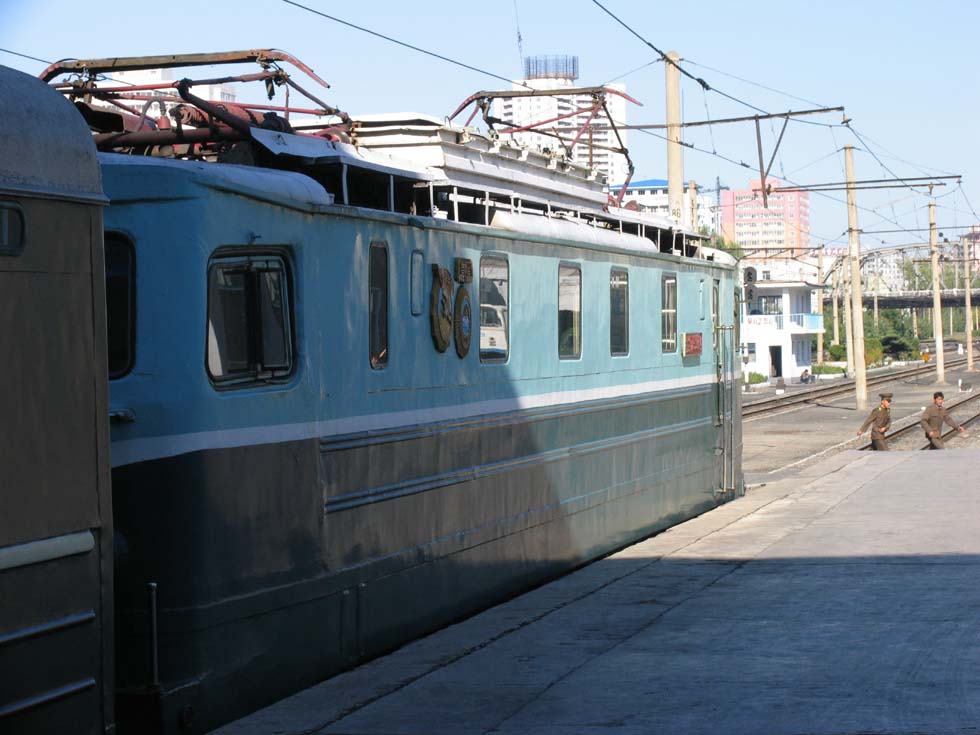
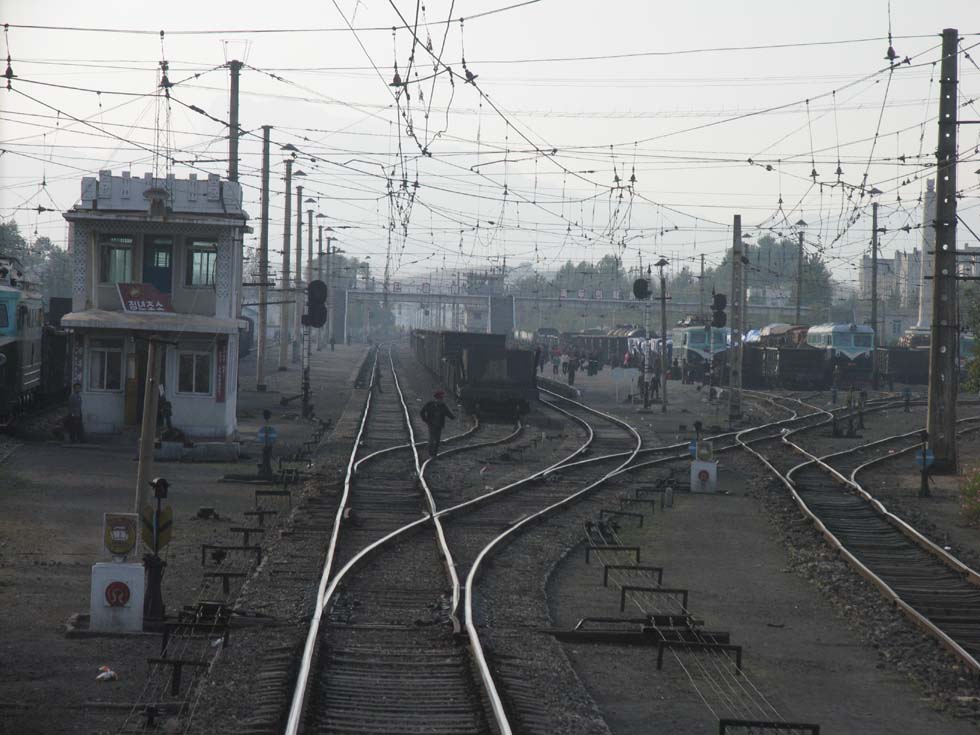
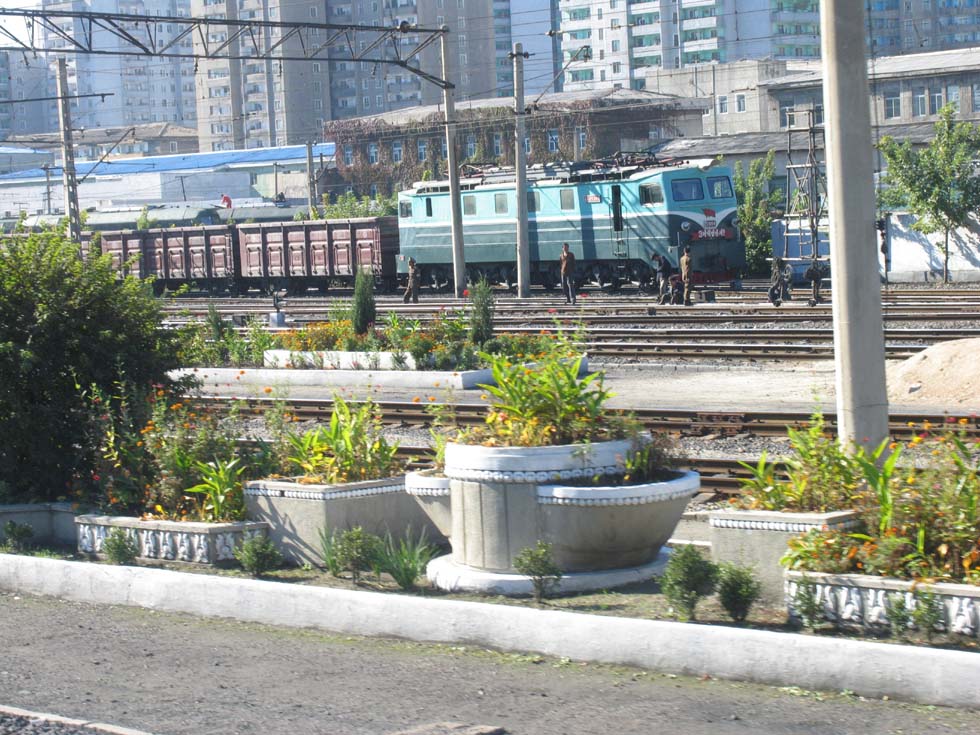
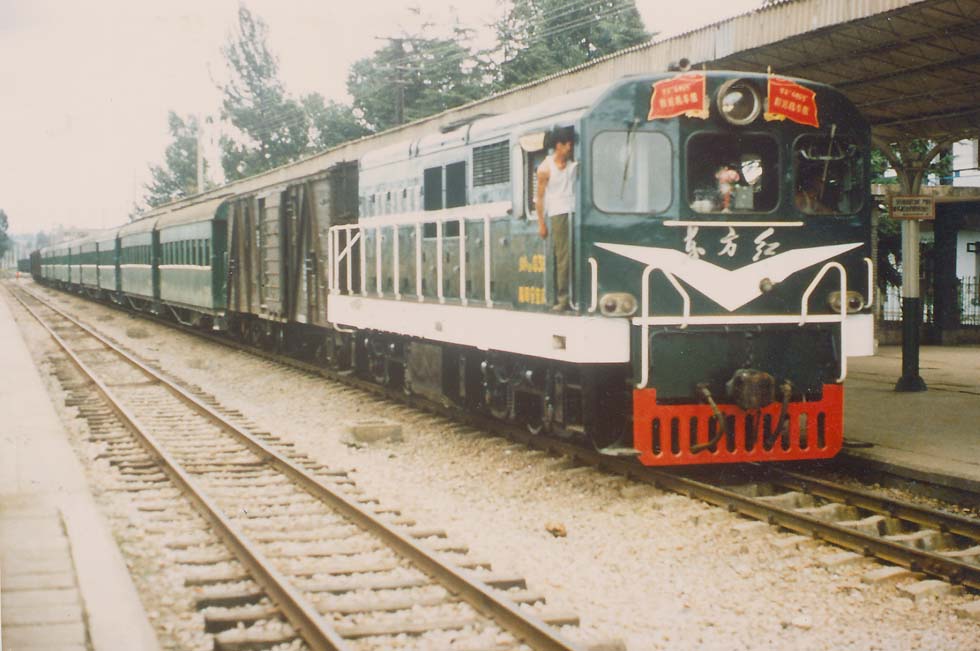
The line of the first Trans-Siberian Express from Moscow by the way of Manchuria to Vladivostok had been closed for decades. Only in the 21st century through cars from Harbin to Vladivostok and to Khabarovsk with change of bogies at the border were introduced. The Soviet’s train Moscow - Manchuria - Beijing from 1954 had always cars for Pyongyang, North Korea, at Shenyang combined with the train Beijing - Tianjin - Pyongyang. Generally there are the two Chinese sleepers Beijing - Pyongyang alternating with two North Korean sleepers. In 2005 the express K27 left Beijing twice weekly with the old green Chinese soft and hard sleepers for Pyongyang and twice weekly with new green air conditioned North Korean sleepers, built in China. The domestic cars in China were now pastel/red colored. A diner runs Beijing - Dandong and Sinuiji - Pyongyang. An additional direct service Moscow - Pyongyang avoiding China, via the border stations Hasan and Tumangang, was introduced decades ago by the “Rossiya” Moscow -Vladivostok. Still now the twice-monthly hard sleeper Moscow - Pyongyang is detached at Ussuryisk. The green North Korean car is contrasting with the red/blue ones of the “Rossiya”. Like China, Korea has standard gauge. Since the end of WWII North Korea had no connection with the South. The first train to run from North to South Korea, announced in 2006, started in May 2007 for privileged passengers, but the timetable listed no regular services. North Korea Express 27 Beijing, April 7, 1988:
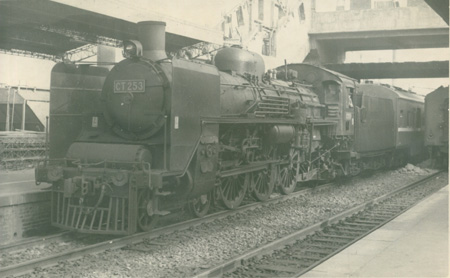
Express passenger steam locomotives of preceding Korean National Railroad: Standard gauge
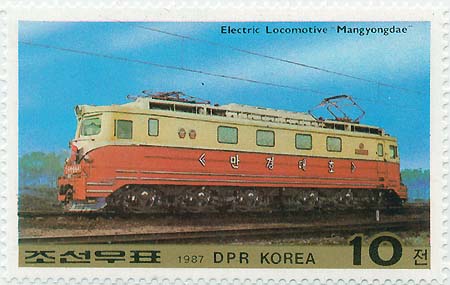
North Korea had got among others the Czech 4-8-2 type 475.1148-72, three Polish 2-6-2 type Ol 49 and twenty Hungarian 4-8-0 type 424 engines. Diesel and electric engine types from the Soviet bloc.
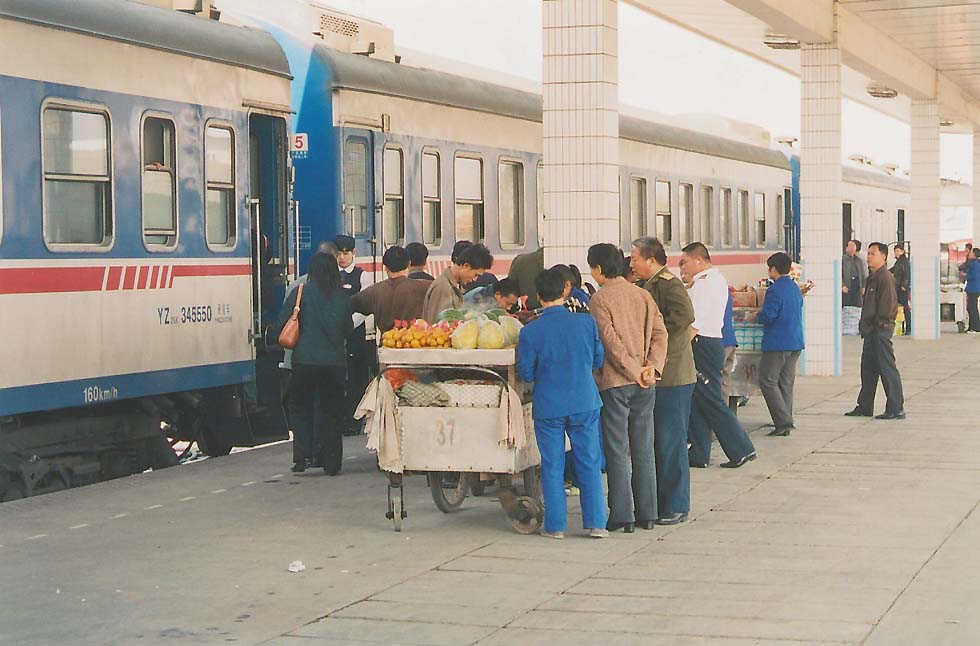
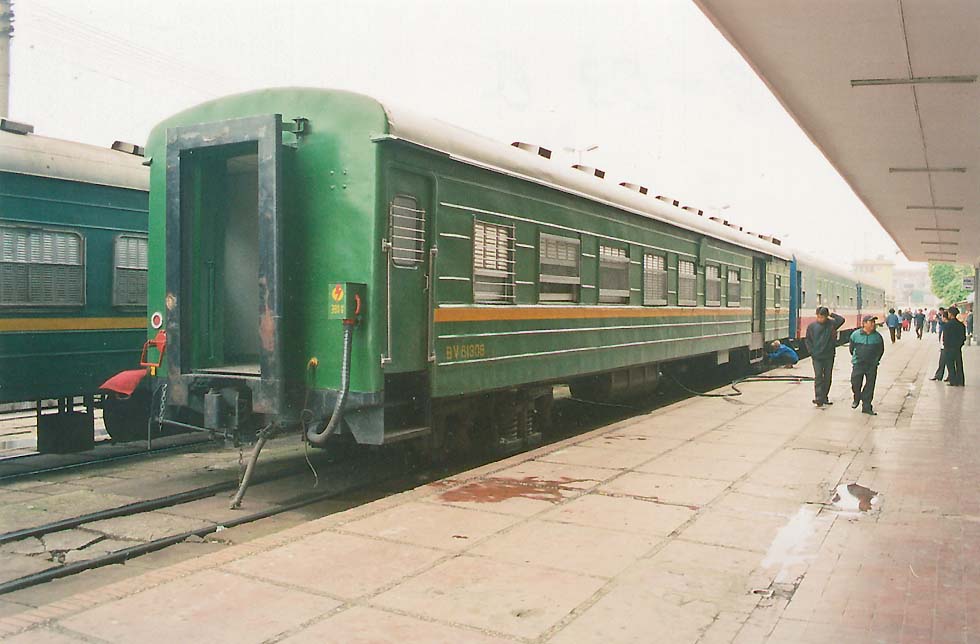
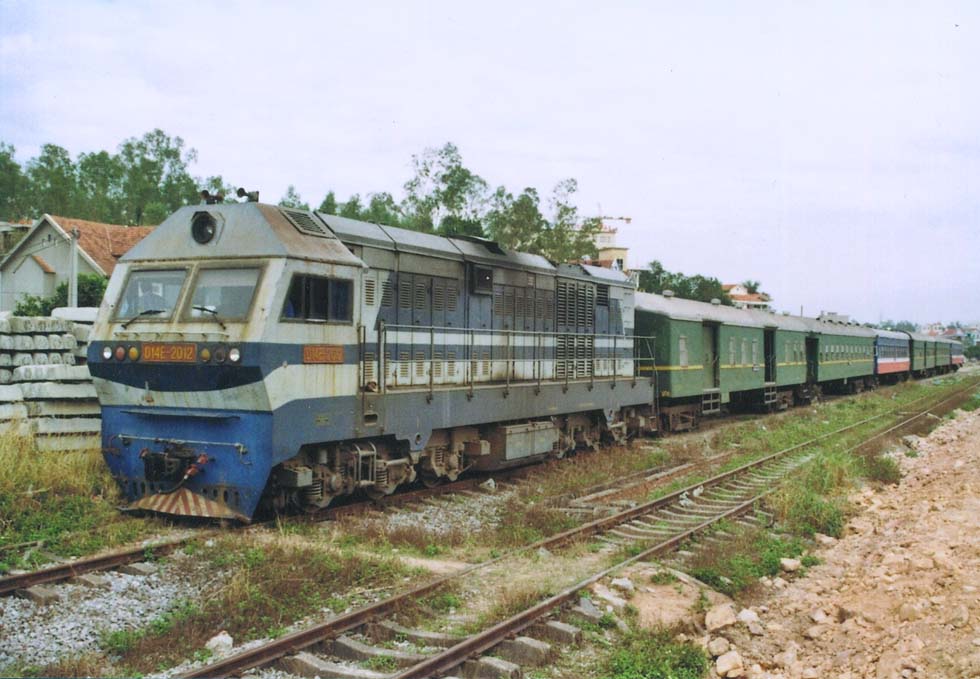
To Vietnam For the history of the once-French colony “Indochine” see the chapter Indian Mail/ International (and the author’s book ‘Jules Verne’s Express’). The strategic meter gauge Yunnan railway from Ha Noi to Kunming in China had been opened in 1910, climbing to an altitude of 2029m, the difficult traffic having been facilitated by adding a “Micheline” railcar to the steam locomotives. During WWII a strategic Yunnan-Burma railway from Kunming via Mengchien and Lashio was planned, but not realized. When the Japanese conquerors approached, Chiang Kai-shek’s troops destroyed the Yunnan railway with its unique “viaduct des arbaletriers”. For China under Mao, connecting isolated Chongqing on the Yangtse river and Kunming in the utmost south with the center of China was more important – and the new lines were built in standard gauge. In 1952 a line from Chongqing to Chengdu was built, but not before 1956 Chengdu could be linked with the northern network by a difficult line from Baoji (since 1937 connected with Beijing, originally by meter-gauge). In 1956 Chongqing got a rail link with Guiyang in the south and in 1966 a line from there westward to Quijing was built, thus establishing a connection with Kunming via the former meter-gauge. This network was connected with the center of China in 1972 with completion of the line from Guiyang to Changsha, situated on the main line Beijing – Hong Kong. Every construction work was surpassed by the direct railway from Chengdu to Kunming, completed in 1970 and praised as one of world’s most spectacular lines. This purely strategical Chengdu-Kunming railway is so difficult that already rumors of closing it down have been spread, after a new line southward via Yibin was built. Chengdu and Chongqing got in 1977 resp. 1978 an additional link with the center of China via Ankang. 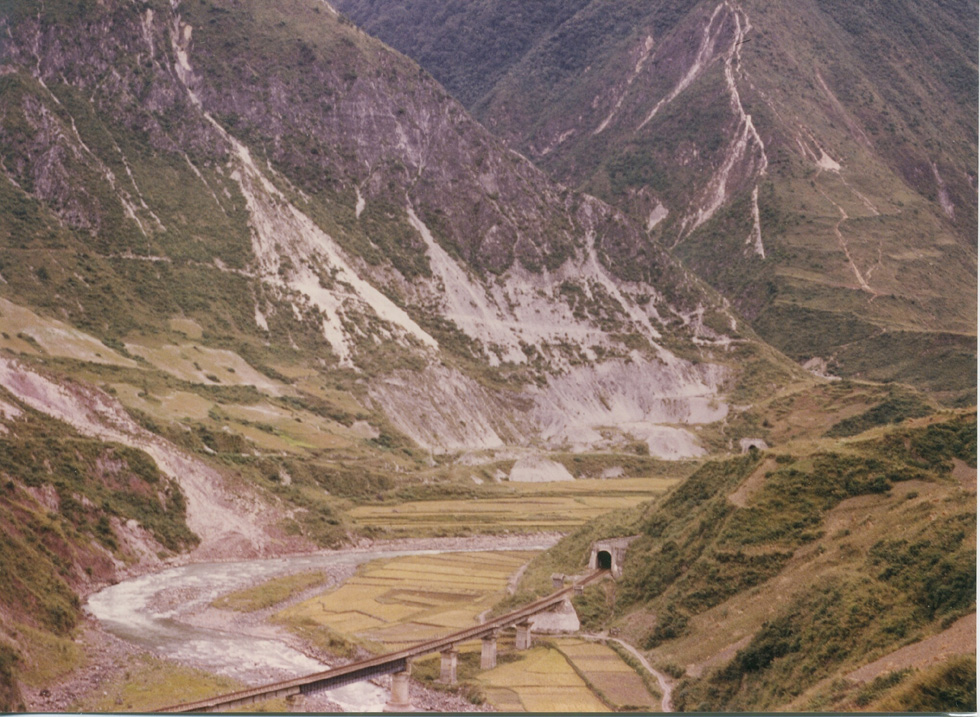 Spiral tunnel section of the line Chengdu – Kunming on the Dadu river, a picture taken from the train in 1981 (William Pearce ) In 1953 the Hong Kong Times has published the proposal of a China-Laos railway from Pisechai on the Yunnan line via Puerh, but it was not built. On the former Yunnan railway between Kunming and He Kou, the Chinese border station, the meter-gauge passenger trains were stopped in 2003, replaced by buses. Meter-gauge rolling-stock has been sold to Myanmar, the former Burma. For the Vietnamese section Lao Cai – Ha Noi, Cook’s Overseas Timetable published (e.g. in 2008) even the offer of privately-owned de-luxe sleeping cars (www.vietnam-stay.com), added to the diesel-hauled trains. Intentions emerged for declaring the former Yunnan railway a world’s cultural heritage. The geographically much more suitable line from China to Vietnam through the flat country was not ready during WWII. In 1939 the railway from the north reached only Laibin and not even Nanning. Only under Mao the line between Laibin, Nanning and the border station Pingxiang was built. An express Beijing – Pingxian started probably in 1957. South of Pingxiang the existing meter-gauge was re-opened (in 1953 or 1958?). The Soviets’ ally North Vietnam never had a regular express from Moscow. Nevertheless a service (with change of trains) was praised by the Soviet timetable and there were some mysterious rumors. Indeed, Vietnamese children, the so-called “Moritzburger”, arrived in communist East Germany by train. Soviet weapons for North Vietnam were unloaded from ship at Haiphong, connected by meter gauge with Ha Noi. With America’s retreat from the bloody Vietnam War, the country was unified in 1976 under Ho Chi Minh and the southern capital Saigon was renamed after him, but now Sai Gon is preferred. Connection between China and Vietnam was provided by the express from Beijing via Nanning to Pingxian, where passengers had to change to meter gauge. In 1978 the traffic China – Vietnam was interrupted, a hall at Pingxian station was the place for Chinese refugees from Vietnam, but soon the war between China and Vietnam ended. Express 5/6 Connection to Vietnam in 1968 (according to official W.M.P.S.) Express 5/6: 1 soft, 2 hard class (4-berth, compartments) KZD Beijing - Pingxian and other cars Beijing - Nanning. Connection on meter gauge by DSVN: 1 coach (upholstered) and 1 van Pingxian - Ha Noi, other cars Lang Son - Ha Noi. From 1996, after interruption, a few cars of express 5/6 Beijing - Nanning continued twice weekly to Dong Dang, connecting with a train Dong Dang - Ha Noi. In 2005 railway historian Heiko Mueller undertook the trip from Beijing to Ha Noi: “We used the through car for Dong Dang, a service provided by two soft-sleepers, attached to the blue/white express T5. At Nanning the two cars from T5 are shunted and passengers are requested to leave the train and to stay in a firmly closed waiting-room... At the Chinese border station Pingxiang the control is aboard the train and passengers are not allowed to leave it. At Dong Dang you have to walk to the luggage check, passport and health control (where everybody’s temperature is taken!) and then you are guided to the connecting meter gauge train for Ha Noi, which you must not leave. The train consisted only of two hard-sleepers and a van. It runs nonstop to Ha Noi.” On the other international line, the meter gauge Kunming - Hekou/ Lao Cai, there is no international passenger traffic. It will be replaced by standard gauge and there is the long-term vision of a Trans Asian Railway linking even Singapore. In the meantime the Chinese meter-gauge stock was bought by Vietnam. T5 Beijing - Zhengzhou - Nanning Hang Yang Zhan, Oct.31, 2005 (according to Heiko Mueller):
T905 Nanning - Dong Dang Nanning, Oct.31, 2005 (according to Heiko Mueller):
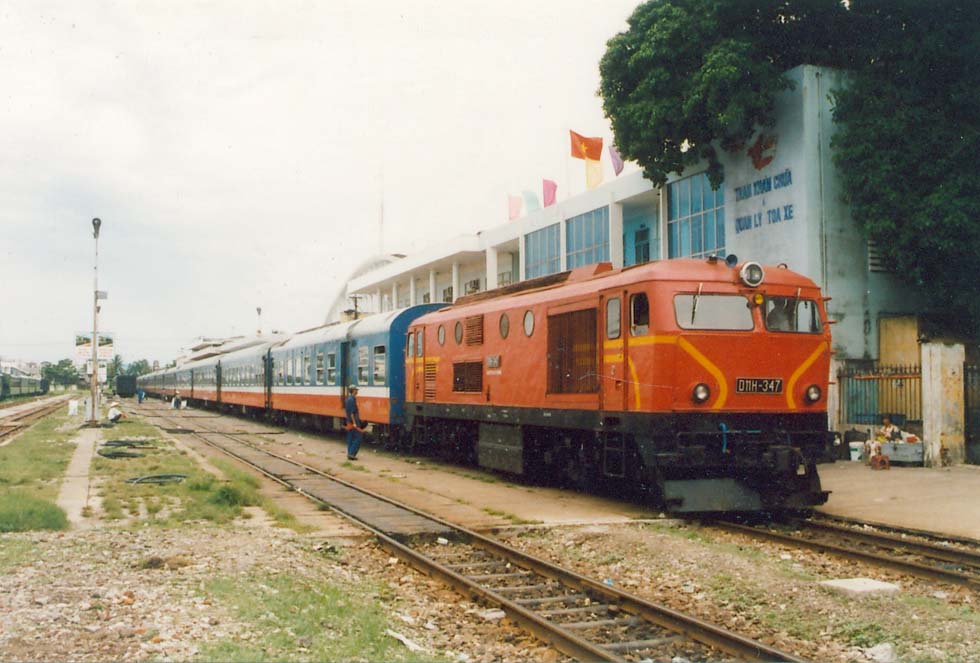
M2 Dong Dang - Ha Noi Dong Dang (Tong Teng), Nov.1, 2005 (according to Heiko Mueller): Diesel D4H (red), 1 BV (generator van, green), 2 BN (hard sleepers, red/blue). Ha Noi - Sai Gon The express from Ha Noi to Sai Gon (Ho Chi Minh Ville) on meter gauge restarted in 1976 with a variety of cars, green or blue. In the meantime the service was upgraded with several new trains including sleeping accommodation and diner service, now painted red/blue. The train became known as the Reunification Express.
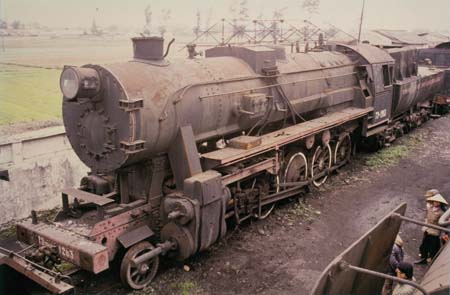
Express passenger steam locomotives of DSVN Vietnam, meter gauge: Among the French built engines taken over in 1976 from the Regie des Chemins de fer du Viet-nam, mainly classes 231 (4-6-2) and 141 (2-8-2) the 141-101 to 110 sometimes still hauled the passenger train Ha Noi - Sai Gon as far as Vinh until 1992. 141-121 and 122 had been built at Gia Lam, and other ones, numbered from 141-151, by China (class SY2). After the line from Lang Son (Chinese border) to Ha Noi had got a third rail for standard gauge, Vietnam received GP6 class (2-8-2) from China (JF6). The German war-type 52 class was sent by Poland (Ty2 and by USSR (TE), but did not take up service.
In 2010 the project of a high-speed line Ha Noi - Sai Gon was published, a necessity for the country's economic progress. Even more fantastic are the Chinese ideas of a "Pan Asian" railway from China to Singapore. It would make the "Little Tiger" states less dependent on the international oil industry. Cambodia In neighboring Cambodia, the harbor Sihanoukville (Kompong Sam) got a rail link with Phnom Penh in 1969. During the years of the disastrous war, the modern green/light-green expresses in French colonial style with (armored) Alsthom diesel locomotives had been interrupted more and more. Then a train Phnom Penh - Battambang was reported running on some days. Cook's timetable listed it e.g. in 2008, but no service to Thailand, though it had already come into consideration. The service to Sihanoukville was suspended. For the railways in the ASEAN member states of South East Asia and for the planned ASEAN Railway Network see the chapter Indian Mail/ International. South Korea
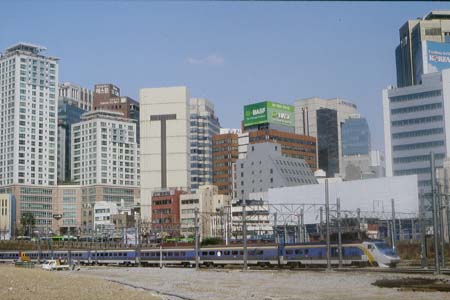
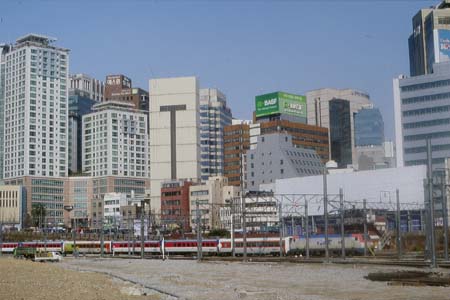
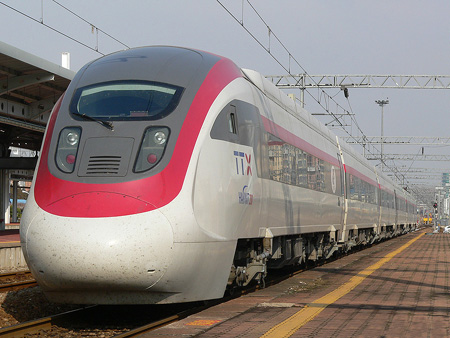
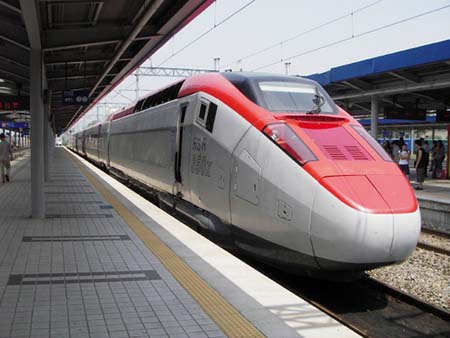
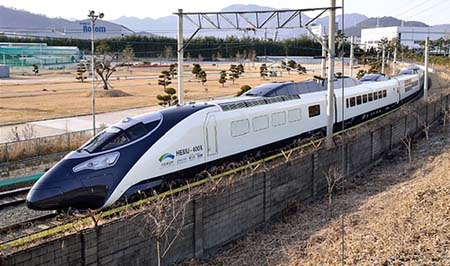
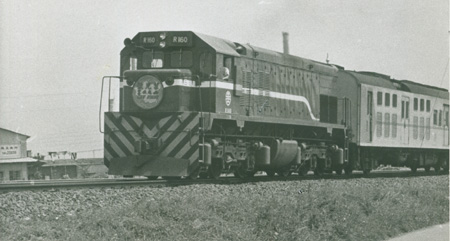
Since WWII the connection between North and South Korea was interrupted. Passenger trains until change to diesels and electrification were hauled by Pacifics. In expectation of a new line Seoul - Busan the expresses and Super Expresses remained diesel-hauled and finally German diesel railcars were introduced. Under president Roh Tae Woo the old project of the 411 km long high-speed line Seoul - Busan re-emerged in 1988. The idea had appeared already in 1973. GEC Alsthom won the contract against competitor Siemens under very favorable conditions for Korea, which got the right to produce the TGV even for export. According to German reports, Siemens was in a disadvantage, being prevented from using intelligence service information due to German law. The 25kV KTX units with 13,560 kW power, running at 300 km/h in daily service and being capable of still higher speeds, resemble the French TGV even in exterior appearance and colors. With 18 cars plus 2 engine units however, they are of a much higher capacity, now known as KTX-I. In 2004 the first section Seoul - Taegu was inaugurated, then extended to Busan. Additionally to the KTX high-speed expresses from Seoul main station to Busan, also KTX from Seoul Yongsan to Guangju and Mokpo were introduced. The Incheon International Airport, Korea's main hub, is connected with Seoul by the A'REX and for late 2012 connection with Busan by KTX high-speed trains became announced. Korea surprised with its own HSR350X project, a train for 350 km/h, based on TGV technology. That Hanvit 350, HSR350, KTX2 or KTX Sancheon, with 8 cars and 2 engine units, started first operations in 2010, being capable of running at 330 km/h. A quite different Hanvit 400 with distributed power came under development. The test unit HEMU-400x, then HEMU430x for 430km/h, built by the Hyundai Rotem Company, was unveiled in 2012 - and immediately it fascinated by its fantastic appearance, showing Korea's great high-speed ambitions. The commercial version KTX-III, consisting of 8 cars with distributed power, with an option for 10 cars and a service speed initially of 370km/h became expected for entering service in 2015 or 2017. For slower lines the tilting TTX or Hanvit 200 was developed. KTX TGV derivative, 20 cars, articulated 9+9 cars: L+M+16T+M+L (L=locomotive-like engine unit, M=first bogie powered, T=trailer).
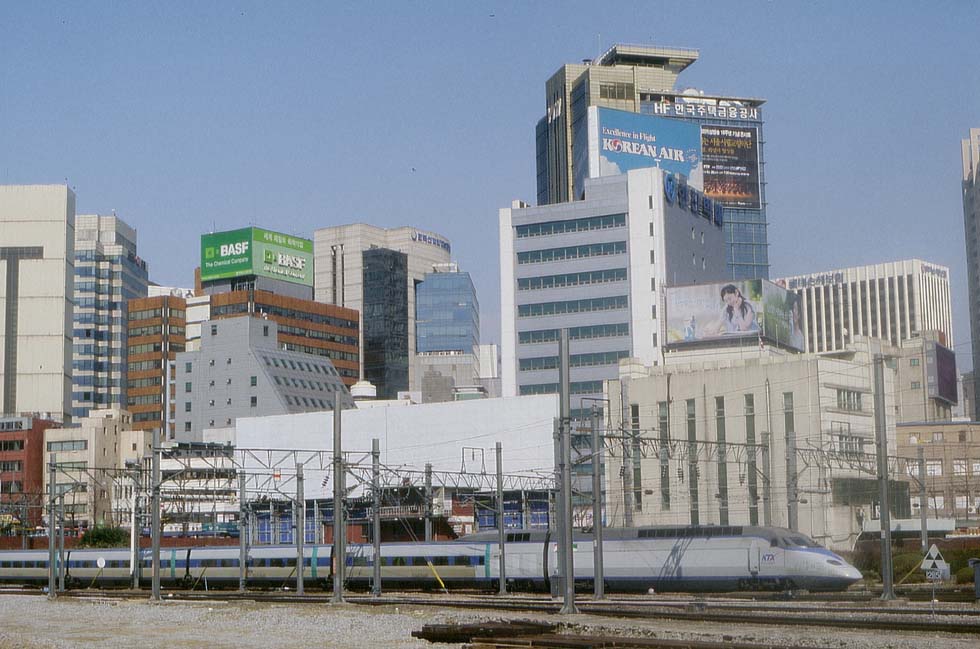 KTX high-speed of Alstom, TGV-based, entering Seoul Main, 2011 (WS)
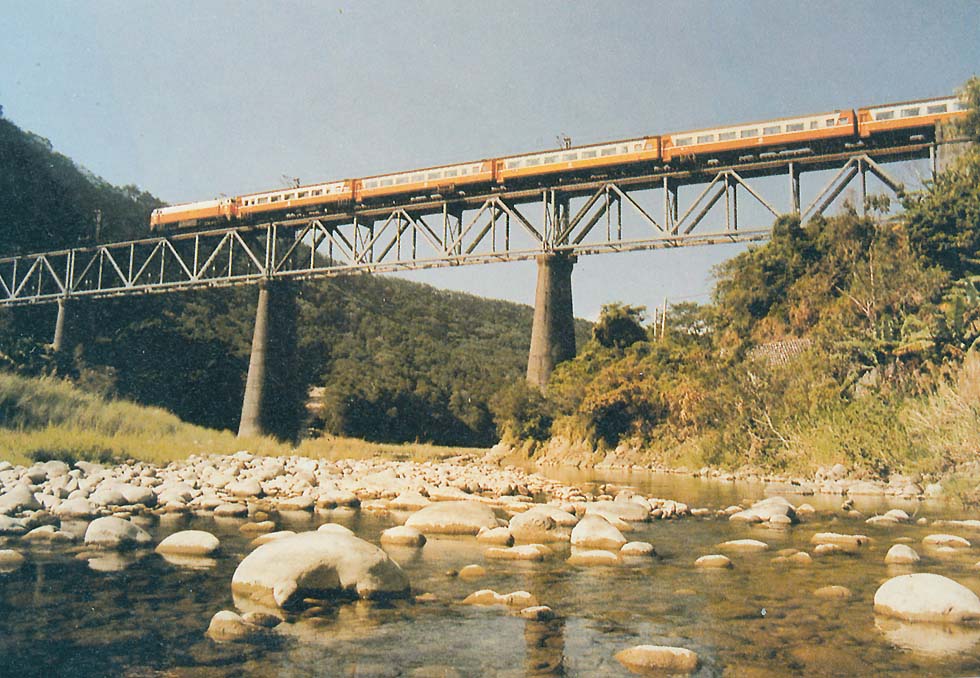
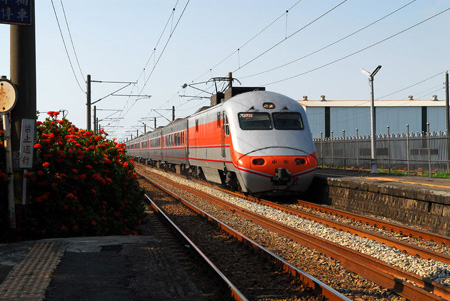
Another matter are tourist trains. A sensational de-Luxe was presented in 2008 – and it should have run to Beijing on occasion of the Olympics (information by Heiko Mueller and Matthias Schulze). Though this travel was prevented, the nice Rail Cruise Haerang train took up cruising in South Korea. An advertisement shows the blue train with 9 cars including a luxury sleeper with only three compartments, sleepers with four compartments, equipped with double-bed and own restroom, diner, sleeping-cars with eight twin-compartments and Pullman sleeper. and has an official top speed of 300 km/h. That service between the capital and the country's most important harbor started in 2007. In the meantime ferry services from China restarted - see www.ships-worldwide.com. Taiwan Taiwan's Cape gauge had a heritage of steam locomotives from the Imperial Taiwan Railway. From 1954 the Pacifics from Baldwin and Japan were replaced by diesels and from 1975 by 25 kV electric engines and railcars. In 2004 even a tourist de-Luxe Formosa Star was introduced for round trips. The only connection with China during many years was the "Macmosa", a ferry Macau - Kaohsiung, then stopped. For a standard gauge TGV line between the capital Taipeh and Kaohsiung, a French study was established. Alstom and Siemens made a coordinated offer and in 1997 a combined ICE2 and TGV was tested in Germany. In 2004 however, high-speed trains, derived from the advanced Japanese Shinkansen 700 series, were ordered for the "Taiwan High Speed Rail" Taipeh - Kaohsiung. That 700T series, each consisting of 12 cars, shows an upgraded styling and has an official top speed of 300 km/h. That service between the capital and the country's most important harbor started in 2007. In the meantime ferry services from China restarted - see www.ships-worldwide.com.
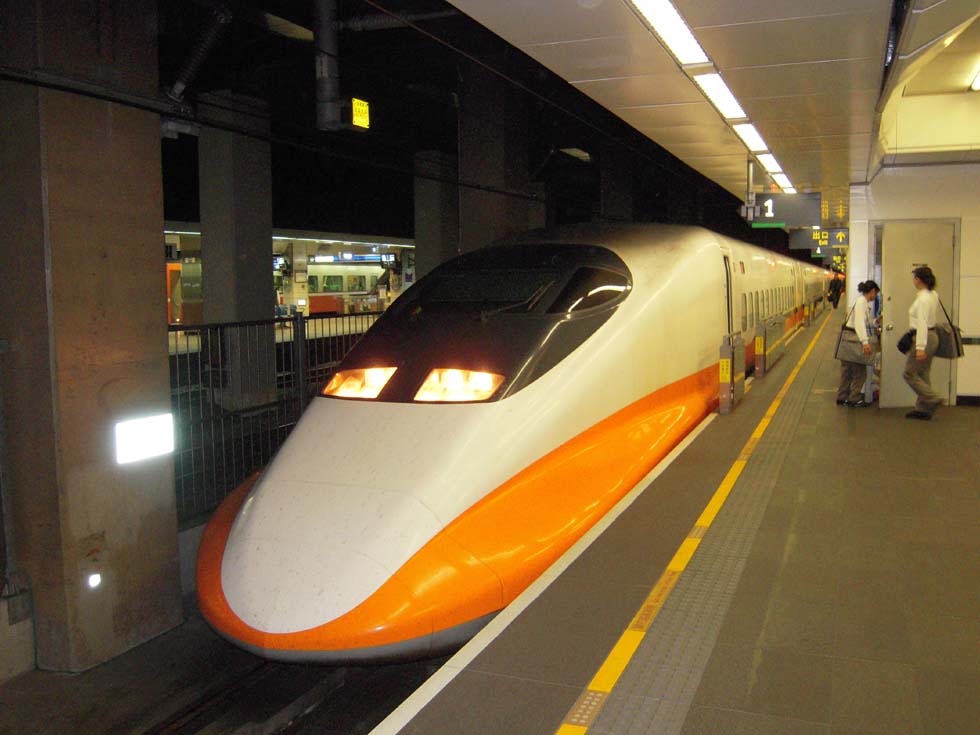 High-speed 700T Taipeh - Kaohsiung of TRTS at Taipeh, 2011 (WS)
| |||||||||||||||||||||||||||||||||||||||||||||||||||||||||||||||||||||||||||||||||||||||||||||||||||||||||||||||||||||||||||||||||||||||||||||||||||